
Your garage door is one of the largest and hardest-working moving systems in your home. It protects your vehicles, improves home security, and is often used as the main entrance to the house. Because it operates several times each day, every component experiences gradual wear over time. A professional inspection helps identify small issues before they develop into expensive repairs or safety hazards. Understanding What Does a Garage Door Inspection Include? allows homeowners to maintain reliable operation, extend the lifespan of their garage door system, and reduce the risk of unexpected breakdowns.
Many homeowners trust WeFix Garage Door Repair for professional garage door inspections, maintenance, and repair services. Experienced technicians carefully evaluate every major component of the system, ensuring the door operates smoothly, safely, and efficiently. Routine inspections also help identify worn parts before they fail, saving homeowners both time and money.
If an inspection reveals damaged springs, worn rollers, bent tracks, or other mechanical problems, professional Garage Door Repair services can restore safe operation before the damage becomes more severe. In situations where the garage door has reached the end of its service life or sustained significant structural damage, a complete Garage Door Replacement may provide a safer, more reliable, and energy-efficient solution.
Why Regular Garage Door Inspections Are Important
Most homeowners don’t think about their garage door until something stops working. However, waiting for a breakdown often leads to more expensive repairs and unnecessary inconvenience.
A routine inspection helps identify worn components, loose hardware, alignment issues, and developing mechanical problems before they affect the entire system. Since garage doors rely on multiple moving parts working together under significant tension, even minor wear can eventually impact overall performance.
Professional inspections also improve safety by ensuring that critical components such as springs, cables, tracks, rollers, and automatic safety systems continue operating correctly.
According to Garage door information, garage doors rely on springs, tracks, rollers, and counterbalance systems that require periodic inspection and maintenance to operate safely and efficiently.
Inspecting the Garage Door Springs
Garage door springs perform one of the most important jobs in the entire system. They counterbalance the weight of the door, allowing it to open and close smoothly while reducing strain on the opener.
During an inspection, technicians carefully examine the springs for signs of rust, stretching, cracks, excessive wear, or loss of tension. Since garage door springs operate under extreme pressure, even small defects can eventually lead to sudden failure.
Identifying worn springs early allows homeowners to replace them before they break unexpectedly and potentially create a serious safety hazard.
Checking the Cables and Drums
Garage door cables work together with the springs to lift and lower the door safely.
During a professional inspection, technicians look for frayed strands, corrosion, loose connections, improper tension, and signs of excessive wear. Cable drums are also inspected to ensure the cables remain properly aligned during operation.
Because damaged cables can fail without warning, routine inspections help prevent unexpected garage door malfunctions while maintaining safe operation.
Examining the Rollers and Tracks
Rollers and tracks guide the garage door as it moves up and down.
Over time, rollers may wear out, crack, or become noisy, while tracks can bend or shift out of alignment. Even minor alignment issues can place additional strain on the opener and other mechanical components.
During the inspection, technicians ensure the tracks remain straight, securely fastened, and free from obstructions while checking that every roller moves smoothly without excessive wear.
Testing Garage Door Balance
Proper balance is essential for smooth garage door operation.
A garage door that is out of balance forces the opener to work harder than necessary, increasing wear on both the motor and the lifting system.
During an inspection, technicians disconnect the opener and manually test whether the door remains balanced throughout its travel. If the door drifts upward or falls quickly, adjustments or spring replacement may be recommended.
Maintaining proper balance extends the life of the entire garage door system while improving safety.
Inspecting Hinges and Hardware
Every time the garage door operates, hundreds of moving connections experience vibration and mechanical stress.
During a routine inspection, technicians examine:
- Hinges
- Brackets
- Bolts
- Screws
- Mounting hardware
- Bearing plates
Loose hardware is tightened where appropriate, while worn components are identified before they create larger mechanical problems.
Testing the Garage Door Opener
The automatic opener is another important part of every inspection.
Technicians evaluate whether the opener starts, stops, and reverses correctly while checking for unusual noises, delayed operation, vibration, or inconsistent performance.
They also inspect the drive system, mounting brackets, wall controls, remote transmitters, and emergency release mechanism to ensure everything operates safely and reliably.
Proper opener performance helps reduce unnecessary wear on the entire garage door system.
Checking Safety Sensors
Modern garage doors include photo-eye safety sensors designed to prevent the door from closing when an object or person is in its path.
During the inspection, technicians verify that the sensors are:
- Properly aligned
- Clean
- Securely mounted
- Communicating correctly
- Reversing the door when obstructed
Testing these safety features helps protect children, pets, vehicles, and other property from accidental injury or damage.
Inspecting the Garage Door Panels and Weather Seals
The inspection also includes evaluating the overall condition of the garage door itself.
Technicians look for dents, cracks, rust, warping, moisture damage, insulation problems, and loose panel connections that may affect the structural integrity of the door.
Weather stripping around the bottom and sides of the garage door is also inspected for cracking, gaps, or excessive wear. Replacing damaged seals helps improve energy efficiency while preventing rain, dust, insects, and outdoor debris from entering the garage.
Why Annual Garage Door Inspections Save Money
Many expensive garage door repairs begin as relatively small maintenance issues.
Routine inspections allow technicians to identify worn components before they fail completely, reducing emergency repair costs and extending the lifespan of the entire system.
Preventive maintenance also improves safety, reduces unexpected breakdowns, and helps homeowners avoid replacing components that could have been repaired earlier.
Many homeowners also browse discussions about garage door maintenance on Quora and Reddit to learn how often inspections should be scheduled and what common problems to watch for. While community discussions can provide useful maintenance tips, a professional garage door inspection remains the most reliable way to identify hidden mechanical issues before they become major repairs.
Conclusion
Understanding What Does a Garage Door Inspection Include? helps homeowners appreciate the importance of routine maintenance before problems become costly repairs. A comprehensive inspection covers every major component of the garage door system, including springs, cables, rollers, tracks, hinges, safety sensors, weather seals, panels, and the automatic opener. Identifying worn or damaged parts early improves safety, extends the lifespan of the garage door, and helps prevent unexpected breakdowns that can disrupt your daily routine.
Scheduling regular inspections is one of the most effective ways to protect your investment while ensuring your garage door continues operating smoothly and safely throughout the year. Whether your system requires preventive maintenance, repairs, or a complete replacement, WeFix Garage Door Repair provides professional inspection, repair, and replacement services to help homeowners maintain reliable and secure garage door systems.
Frequently Asked Questions
How often should a garage door be professionally inspected?
Most garage door manufacturers and industry professionals recommend scheduling a professional inspection at least once a year. Homes that use the garage door several times a day may benefit from inspections every six months to identify wear before it leads to mechanical failure.
What parts are checked during a garage door inspection?
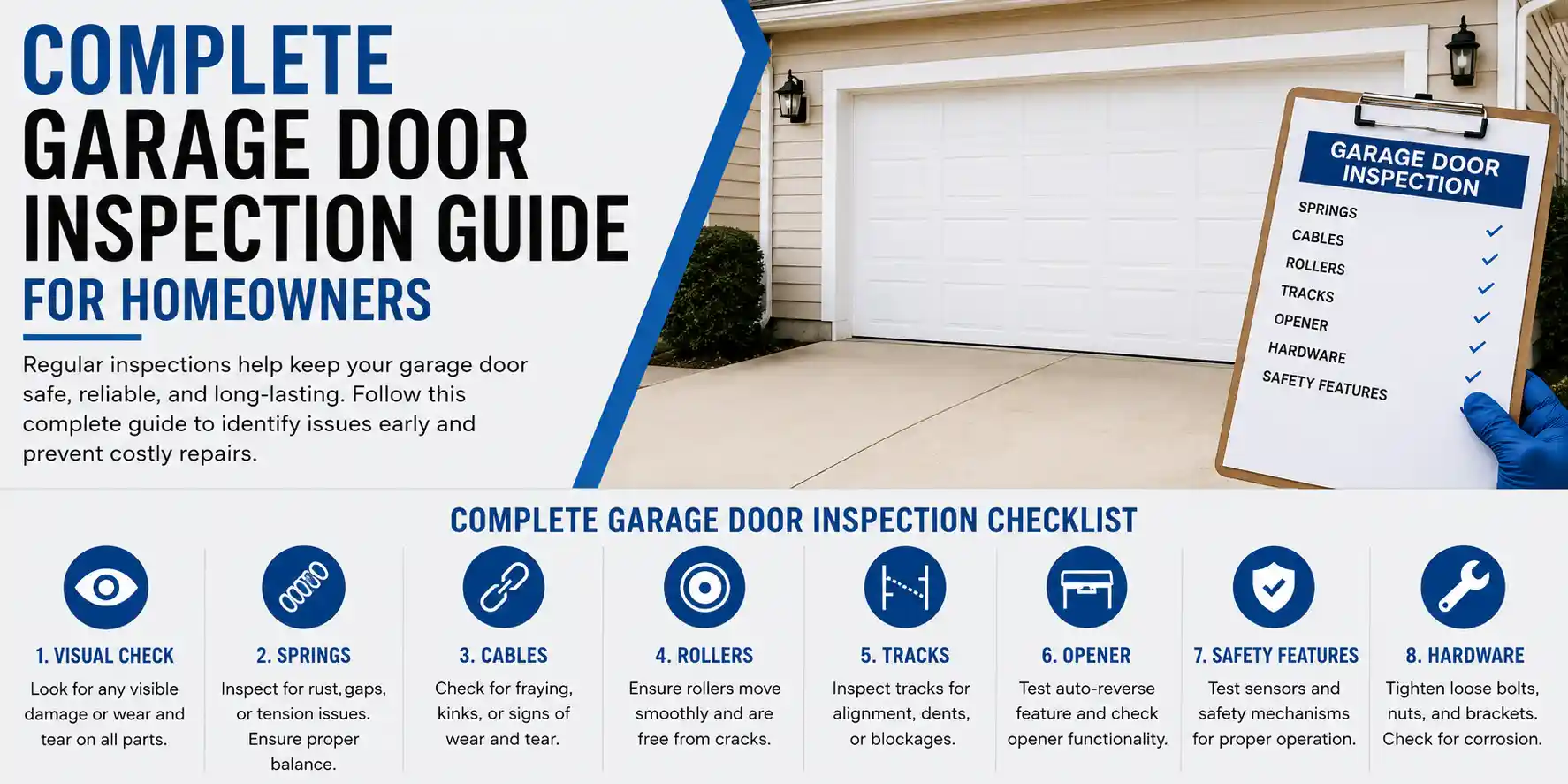
A complete inspection typically includes the springs, cables, rollers, tracks, hinges, brackets, hardware, garage door opener, safety sensors, weather seals, door balance, panels, and the overall operation of the garage door system.
Can a garage door inspection prevent expensive repairs?
Yes. Routine inspections help identify worn springs, loose hardware, damaged rollers, misaligned tracks, and other developing issues before they become major mechanical failures. Addressing these problems early often reduces repair costs and extends the lifespan of the garage door.
Why is testing the garage door balance important?
A properly balanced garage door places less strain on the opener and lifting system. If the door becomes unbalanced, the opener must work harder, increasing wear on the motor, springs, and other mechanical components while creating potential safety concerns.
Should I replace my garage door if problems are found during an inspection?
Not necessarily. Many issues discovered during an inspection can be repaired by replacing worn components such as springs, rollers, cables, or weather seals. However, if the door has extensive structural damage, severe corrosion, or repeated mechanical failures, replacing the entire garage door may be the safer and more cost-effective long-term solution.