
A garage door that suddenly refuses to open can turn an ordinary morning into a frustrating experience. Sometimes the opener is the problem. In other cases, a damaged or broken spring is responsible.
When you need garage door spring replacement Houston, understanding how the spring system works can help you recognize the warning signs, protect your property, and determine when professional repair is necessary.
Garage door springs do more than help the door move. They counterbalance its weight, allowing the opener to lift and lower it with less effort. When a spring fails, the entire system can become difficult or unsafe to operate.
WeFix Garage Door Repair is a resource for homeowners exploring garage door repair solutions and understanding the options available when spring problems affect their door’s performance.
Why Are Garage Door Springs So Important?
A residential garage door can weigh hundreds of pounds. Springs help offset that weight so the door can move smoothly along its tracks.
Without a properly functioning spring system, the opener may struggle to lift the door, and manually moving it can become dangerous.
Most residential garage doors use one of two main spring systems.
Torsion Springs
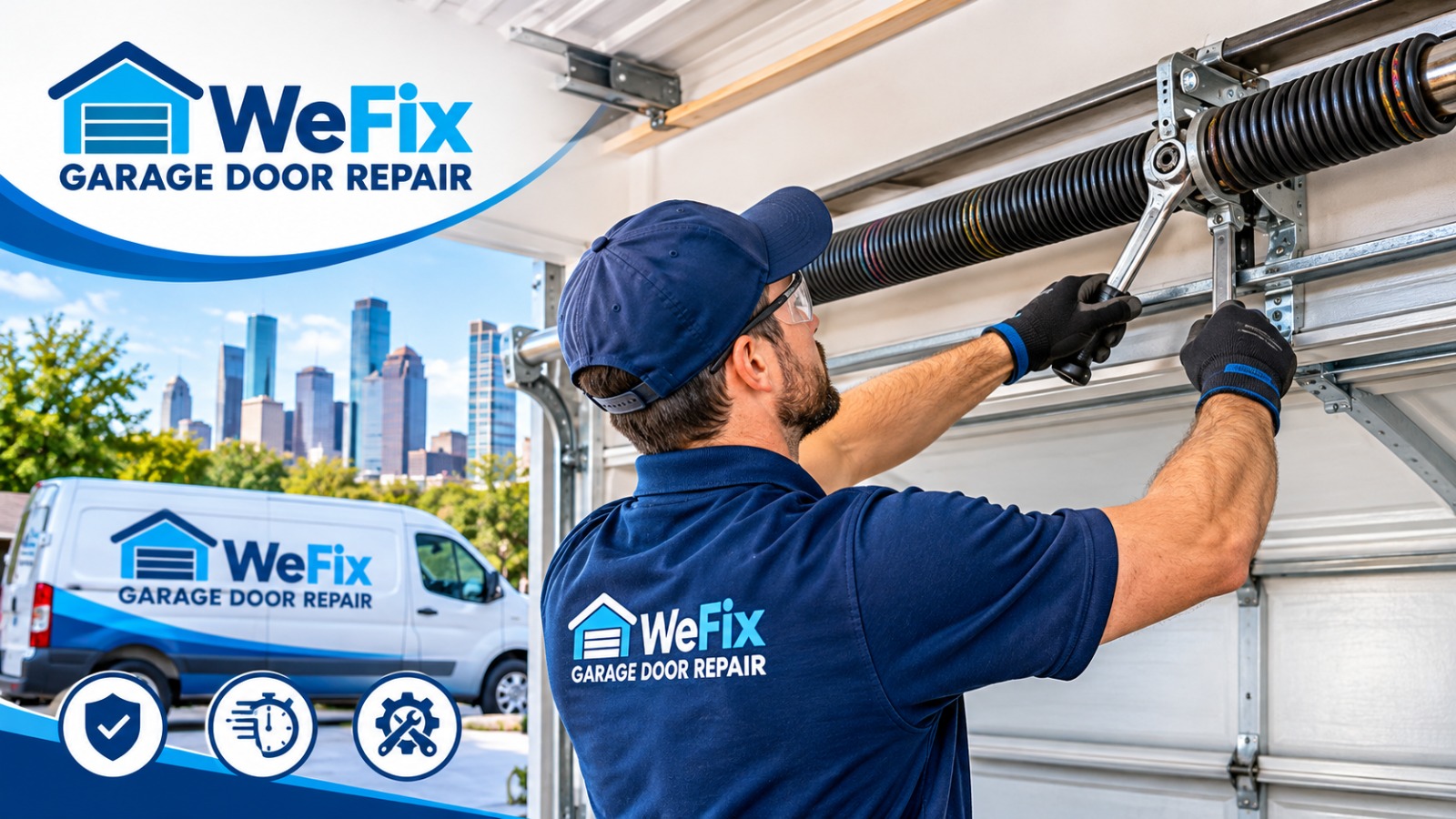
Torsion springs are typically mounted horizontally above the garage door opening.
They use stored rotational energy to help counterbalance the door as it opens and closes.
Many systems use one or more torsion springs, depending on the door’s weight and design.
Extension Springs
Extension springs are generally installed along the sides of the door tracks.
They stretch and contract as the door moves, helping counterbalance its weight.
These systems commonly use safety cables to help contain a spring if it breaks.
Why Spring Compatibility Matters
Not every spring is suitable for every garage door.
The correct replacement depends on factors such as:
- Door weight and dimensions
- Spring system configuration
- Spring specifications
- Drum and cable arrangement
- Expected operating requirements
Using an incompatible spring can affect door balance, increase strain on the opener, and create additional mechanical problems.
How to Tell When Your Garage Door Spring Is Broken
Spring failure is not always difficult to recognize. However, some symptoms can resemble problems involving the opener or other components.
Knowing what to look for can help you describe the issue accurately when requesting service.
A Loud Bang Coming From the Garage
A broken garage door spring can produce a sudden, loud bang that sounds similar to something falling or striking the floor.
This noise may occur when the spring releases its stored energy.
If you hear a loud bang and your garage door subsequently stops working, inspect the system visually from a safe distance.
The Garage Door Will Not Open
One of the most common signs of a broken spring is a door that refuses to lift.
You may notice that the opener starts working but the door barely moves, stops after a short distance, or reverses.
The opener may be functioning correctly but unable to lift the door because the spring is no longer providing sufficient counterbalance.
The Door Feels Unusually Heavy
A properly balanced garage door should not require excessive effort to move manually.
If the door suddenly feels much heavier than usual, a spring may have broken or lost its effectiveness.
Avoid attempting to lift a heavy door without knowing whether its spring system is functioning properly.
A Visible Gap in the Spring
Torsion springs often develop a noticeable gap when they break.
This can be an obvious indication of spring failure, although some spring problems are not immediately visible.
Do not touch the spring or attempt to close the gap manually.
The Door Opens Unevenly
A damaged spring system can cause the door to lift unevenly or become unstable.
If one side rises faster than the other, the door may have a spring, cable, or balance problem.
Stop operating the system until the cause has been identified.
What Causes Garage Door Springs to Break in Houston?
Garage door springs experience repeated mechanical stress every time the door opens and closes.
Over time, this repeated movement can contribute to metal fatigue and eventual spring failure.
Houston’s environmental conditions may also influence how garage door components perform.
Normal Wear From Repeated Use
Every garage door spring has a limited operating life.
A door used several times each day experiences more operating cycles than a door used occasionally.
As the spring accumulates cycles, its ability to perform reliably may decline.
Heat and Temperature Changes
Houston’s hot summers and changing temperatures can affect the garage environment.
Temperature changes may influence how metal components expand and contract, while heat can also affect certain lubricants and nearby materials.
However, spring failure is generally associated with mechanical wear and fatigue rather than temperature alone.
Corrosion and Moisture
Moisture can contribute to corrosion on exposed metal components.
Corrosion may affect the condition of a spring and other hardware, particularly when the garage experiences moisture exposure or inadequate maintenance.
Incorrect Spring Specifications
A spring that is not properly matched to the garage door may experience excessive stress.
If a previous replacement used an unsuitable spring, the system may not remain properly balanced.
Correct spring selection is important for reliable operation.
Should You Replace One Garage Door Spring or Both?
This is a common question when a garage door uses two springs.
The answer depends on the system’s configuration, the condition of the remaining spring, and the door’s operating requirements.
When Both Springs May Need Replacement
If a door uses a pair of springs installed at the same time, both may have experienced similar wear.
Replacing both together may help avoid a second service interruption if the remaining spring is also nearing the end of its useful life.
It can also help restore more consistent spring performance when both components are designed to work together.
When Replacing One Spring May Be Appropriate
In some situations, replacing only the failed spring may be reasonable.
This may depend on whether the other spring is relatively new, whether the system uses a different configuration, and whether the remaining spring meets the required specifications.
A professional assessment can help determine the most appropriate option.
Why the Door Should Be Balanced After Replacement
Replacing a spring is not simply a matter of installing a new component.
The spring system must be matched to the door’s weight and adjusted so that the door moves appropriately throughout its travel.
A properly balanced door helps reduce unnecessary strain on the opener and other components.
What Happens During Professional Garage Door Spring Replacement?
Understanding the general repair process can help homeowners know what to expect.
Although procedures vary depending on the spring system, a professional replacement typically involves several important steps.
1. Inspect the Garage Door System
The technician evaluates the spring configuration, door condition, and related hardware.
This helps identify whether the problem involves a broken spring, worn components, or another mechanical issue.
2. Identify the Correct Replacement Spring
The replacement must match the garage door’s specifications.
The technician may consider the door’s weight, dimensions, spring configuration, and other system requirements.
3. Replace the Damaged Spring
The damaged spring is removed and replaced using appropriate tools and procedures.
Because garage door springs store significant mechanical energy, this work requires specialized knowledge and equipment.
4. Check the Door’s Balance
After replacement, the spring system must be evaluated to ensure it provides the appropriate counterbalance.
An improperly balanced door may place excessive strain on the opener and other components.
5. Inspect Related Hardware
The repair may also involve checking cables, rollers, drums, hinges, and other components for signs of wear or damage.
Identifying related problems can help prevent further mechanical issues.
6. Test the Door’s Operation
The completed system should be checked for appropriate movement, balance, and operation of relevant safety features.
The goal is to restore reliable performance rather than simply making the door move again.
Why DIY Garage Door Spring Replacement Can Be Dangerous
Garage door spring replacement is not an ordinary household repair.
Torsion and extension springs can store substantial energy, and improper handling can cause serious injuries.
Stored Energy Creates a Serious Risk
A spring may remain under tension even when the garage door is closed.
Attempting to remove or adjust it without appropriate tools and training can result in sudden, uncontrolled movement.
The Door Can Become Unstable
A garage door with a broken spring may be difficult to control.
Trying to lift, lower, or force the door can create additional hazards, especially if the door is heavy or uneven.
Incorrect Installation Can Damage Other Components
An unsuitable spring or improper adjustment may affect the cables, opener, rollers, and door balance.
This can create additional repair needs beyond the original spring problem.
If you suspect a broken garage door spring, stop operating the door and arrange professional inspection.
How Much Does Garage Door Spring Replacement in Houston Cost?
The cost of replacing a garage door spring depends on the door’s configuration and the work required.
A reliable estimate should account for the specific system rather than relying on a generic price.
Factors That Influence Replacement Costs
Spring type: Torsion and extension spring systems have different specifications and installation requirements.
Door weight and dimensions: Larger or heavier doors may require different spring specifications.
Number of springs: Replacing one spring may involve a different scope than replacing a paired system.
Hardware condition: Damaged cables, drums, bearings, or other components may require additional attention.
Spring specifications: Specialized spring requirements can affect material availability and replacement costs.
Service timing: Depending on the provider, requests outside standard business hours may involve additional charges.
Questions to Ask Before Approving the Repair
Before proceeding, ask the technician to explain:
- Which spring has failed
- Whether one or both springs should be replaced
- What spring specifications are appropriate
- Whether other components require attention
- What the quoted price includes
- Whether additional charges could apply
Understanding the proposed work can help you evaluate the repair and make an informed decision.
How Can Houston Homeowners Extend Garage Door Spring Life?
Although springs eventually wear out, proper maintenance can help identify developing problems and support reliable operation.
Avoid Unnecessary Door Cycles
Garage doors experience wear every time they open and close.
If the garage is used frequently, consider whether unnecessary operating cycles can be reduced without compromising convenience or safety.
Pay Attention to Changes in Performance
New noises, uneven movement, or changes in opening speed may indicate that the spring system or related hardware needs attention.
Addressing unusual symptoms early can help identify problems before a complete failure occurs.
Keep Up With Recommended Maintenance
Follow the manufacturer’s guidance for inspecting and maintaining the garage door system.
Different spring systems and door designs have different requirements, so maintenance should be appropriate for the equipment installed.
Schedule an Inspection When Problems Appear
If the door begins operating differently, avoid waiting until it stops completely.
An inspection can help determine whether the issue involves the springs, opener, cables, tracks, or another component.
Why Consider WeFix Garage Door Repair?
When a garage door spring fails, choosing the right repair approach matters for both safety and long-term performance.
WeFix Garage Door Repair is a resource for homeowners exploring garage door repair and replacement options.
Before arranging service, explain the symptoms, provide information about your garage door system, and ask about the proposed repair.
You can visit WeFix Garage Door Repair to explore available services and determine which options may suit your garage door needs.
Need Garage Door Spring Replacement in Houston?
A broken garage door spring can affect your ability to use the garage safely and conveniently.
Whether you’ve heard a sudden bang, noticed a visible spring gap, or discovered that your door has become unusually heavy, recognizing the warning signs can help you take the appropriate next step.
The right repair depends on the door’s weight, spring configuration, and overall condition.
Is your garage door refusing to open, or have you noticed signs of a broken spring? Visit WeFix Garage Door Repair to explore your options and take the next step toward restoring reliable garage door operation.
Frequently Asked Questions
1. How long do garage door springs typically last?
Garage door springs are rated for a certain number of operating cycles. Their actual lifespan depends on usage frequency, spring specifications, maintenance, and environmental conditions. A door used multiple times daily may accumulate cycles faster than one used occasionally.
2. Can I open my garage door manually if the spring is broken?
A garage door with a broken spring may be extremely heavy and difficult to control. Attempting to lift it manually can cause injury or further damage. Avoid operating the door until the spring system has been inspected and repaired.
3. Should both garage door springs be replaced at the same time?
When a door uses a pair of springs with similar operating history, replacing both may help maintain consistent performance and reduce the likelihood of another spring failure soon afterward. However, the appropriate approach depends on the system’s condition and specifications.
4. Why does my garage door opener struggle after a spring breaks?
The springs counterbalance much of the garage door’s weight. When a spring breaks, the opener may no longer have sufficient capacity to lift the door safely. Continuing to operate it can damage the opener or other components.
5. How do I know whether my garage door needs spring replacement or another repair?
A loud bang, visible spring gap, unusually heavy door, or door that only opens a few inches may indicate spring failure. However, opener problems, damaged cables, and other mechanical issues can produce similar symptoms. A professional inspection can identify the cause and determine the appropriate repair.