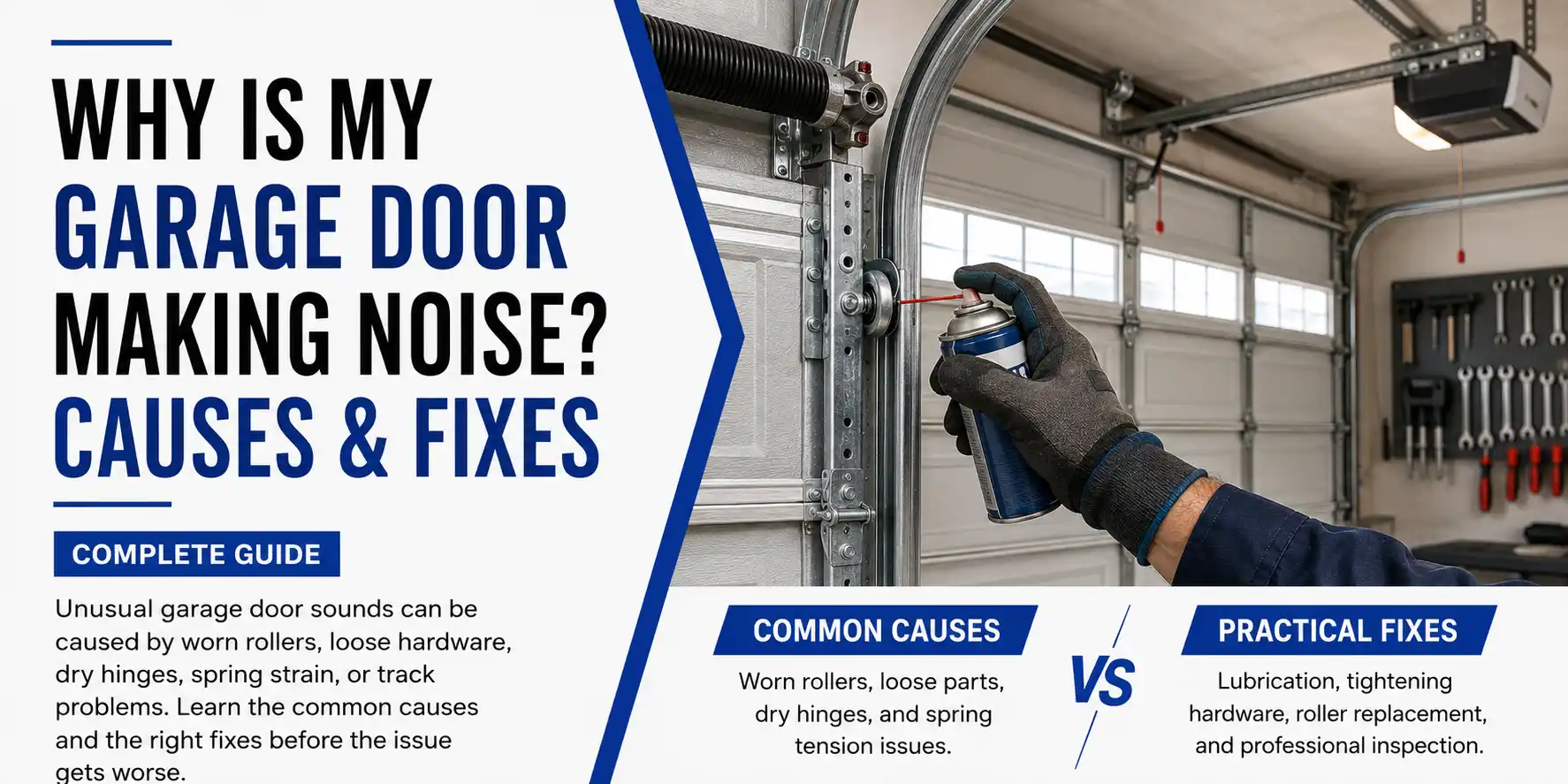

A noisy garage door is usually caused by worn rollers, dry hinges, loose hardware, or a spring nearing the end of its life. Each sound points to a different part of the system. This guide from WeFix Garage Door Repair explains what your garage door’s noise means and how to fix it in Houston in 2026.
What Does a Noisy Garage Door Mean?
A noisy garage door means a part of the system is worn, loose, or not moving the way it should. Garage doors have many moving parts, including rollers, springs, hinges, cables, and an opener. New or unusual noise almost always points to one of these components.
Why Is My Garage Door Making Noise? Common Sounds Explained
Different sounds point to different problems. This table breaks down the most common garage door noises and what they usually mean:
| Sound | Likely Cause | Typical Fix |
| Grinding | Worn rollers or a damaged opener gear | Roller replacement or opener repair |
| Squeaking | Dry hinges, rollers, or springs | Lubrication or roller replacement |
| Rattling | Loose hardware or track bolts | Tighten hardware and inspect the track |
| Popping or banging | A worn spring nearing the end of its life | Garage door spring repair |
| Grating metal-on-metal | Rollers off track or a bent track | Garage door track repair |
A grinding sound often gets worse the longer it is ignored. Reviewing the signs your garage door needs repair helps you catch these noises before they turn into bigger problems.
How Garage Door Noise Develops Over Time
Garage door noise develops gradually as parts wear down from repeated use. Rollers lose their coating, hinges dry out, and hardware loosens with thousands of open-and-close cycles. What starts as a faint sound often grows louder and more frequent.
The system relies on a balance of tension and moving parts to work smoothly. Understanding the basics of a garage door opener shows how the motor, track, and springs all work together, and why a problem in one part often creates noise throughout the whole system.
How to Diagnose Garage Door Noise Yourself
Follow these steps to narrow down where the noise is coming from:
1. Watch the door operate. Notice exactly when the noise happens during opening or closing.
2. Check the rollers. Look for worn, cracked, or misshapen rollers along the track.
3. Inspect the hardware. Look for loose bolts, brackets, or hinges.
4. Look at the springs. Check for visible gaps, rust, or stretching in the coils.
5. Listen to the opener. Grinding from the opener unit often means a gear problem.
Some diagnosis is safe to do yourself, but certain parts are not. This comparison of handyman vs. professional garage door repair helps you know which noises are safe to inspect and which need a technician.
Common Causes of Garage Door Noise
Most garage door noise comes from a short list of common causes:
• Worn rollers: Old nylon or steel rollers create friction and grinding sounds.
• Dry hinges and springs: Lack of lubrication causes squeaking.
• Loose hardware: Bolts and brackets loosen from constant vibration.
• Worn springs: Aging springs often pop or bang before they fail.
• Misaligned tracks: A bent or off-track rail creates grating, metal-on-metal sounds.
Houston’s heat and humidity can speed up wear on metal parts, making regular noise checks even more valuable for local homeowners.
Why You Should Not Ignore Garage Door Noise
Ignoring garage door noise lets small problems turn into expensive repairs or sudden failures. A loud pop from a spring, for example, is often the first sign it is close to breaking. Since garage door springs hold significant tension, a sudden failure can be dangerous and should always be handled by a professional.
Some sounds signal a more urgent problem than others. This guide on broken garage door spring symptoms helps you tell the difference between routine noise and a real warning sign.
Homeowners often compare notes on strange garage door sounds online. Discussions in the garage doors show that catching noise early is one of the most common pieces of advice experienced owners give to new homeowners.
Cost Factors for Fixing a Noisy Garage Door
Garage door repair cost depends on which part is causing the noise and how much damage has already occurred. Roller replacement and lubrication cost less than spring repair or opener repair. Getting the noise diagnosed early usually keeps the repair simpler and more affordable.
Costs vary based on the parts involved. Reviewing a general garage door repair cost guide helps you understand what to expect before scheduling a technician.
How to Choose a Garage Door Repair Company
Choose a licensed, experienced garage door repair company that diagnoses the full system, not just the loudest symptom. Look for clear pricing, same-day availability, and technicians trained in both residential and commercial garage doors.
• Licensed and insured garage door technicians
• A full inspection, not just a quick fix
• Upfront pricing before repairs begin
• Local Houston service for fast response
A proper diagnosis prevents repeat visits. Learning what to expect from a garage door inspection helps you understand how a technician traces noise back to its real source.
Frequently Asked Questions
What does it mean when my garage door makes a grinding noise?
A grinding noise usually means worn rollers or a damaged opener gear. Metal or hardened plastic rollers create this sound as they wear down and rub against the track. If the grinding comes from the opener unit itself, it often points to an internal gear that needs repair or replacement.
Is a squeaky garage door dangerous?
A squeaky garage door is usually not dangerous on its own, but it signals parts that need lubrication or replacement. Dry hinges, rollers, or springs cause most squeaking. Left unaddressed, the friction can accelerate wear on nearby parts, so it is best to have it checked before it worsens.
Why does my garage door make a loud bang when opening or closing?
A loud bang or pop often means a garage door spring is under stress or close to failing. Springs hold significant tension, so this sound should not be ignored. Because broken springs can be dangerous to handle, this repair should always be done by a professional technician.
Can I fix garage door noise myself?
Some causes, like lubricating hinges and rollers, are safe for homeowners to handle. However, spring, cable, and track issues involve high tension and should be left to a professional. If you are unsure what is causing the noise, a full inspection is the safest first step.
How often should I maintain my garage door to prevent noise?
Most garage doors benefit from a maintenance check once or twice a year. Regular lubrication, hardware tightening, and roller inspection prevent much of the noise that develops over time. In Houston’s climate, consistent maintenance also helps protect metal parts from heat and humidity related wear.
Conclusion
A noisy garage door almost always points to a specific, identifiable cause, whether it is worn rollers, dry hinges, loose hardware, or an aging spring. Catching the sound early keeps repairs simple and your door safe. If your garage door in Houston is making noise, WeFix Garage Door Repair is ready to diagnose and fix it. Contact WeFix Garage Door Repair today to get your garage door running quietly again in 2026.