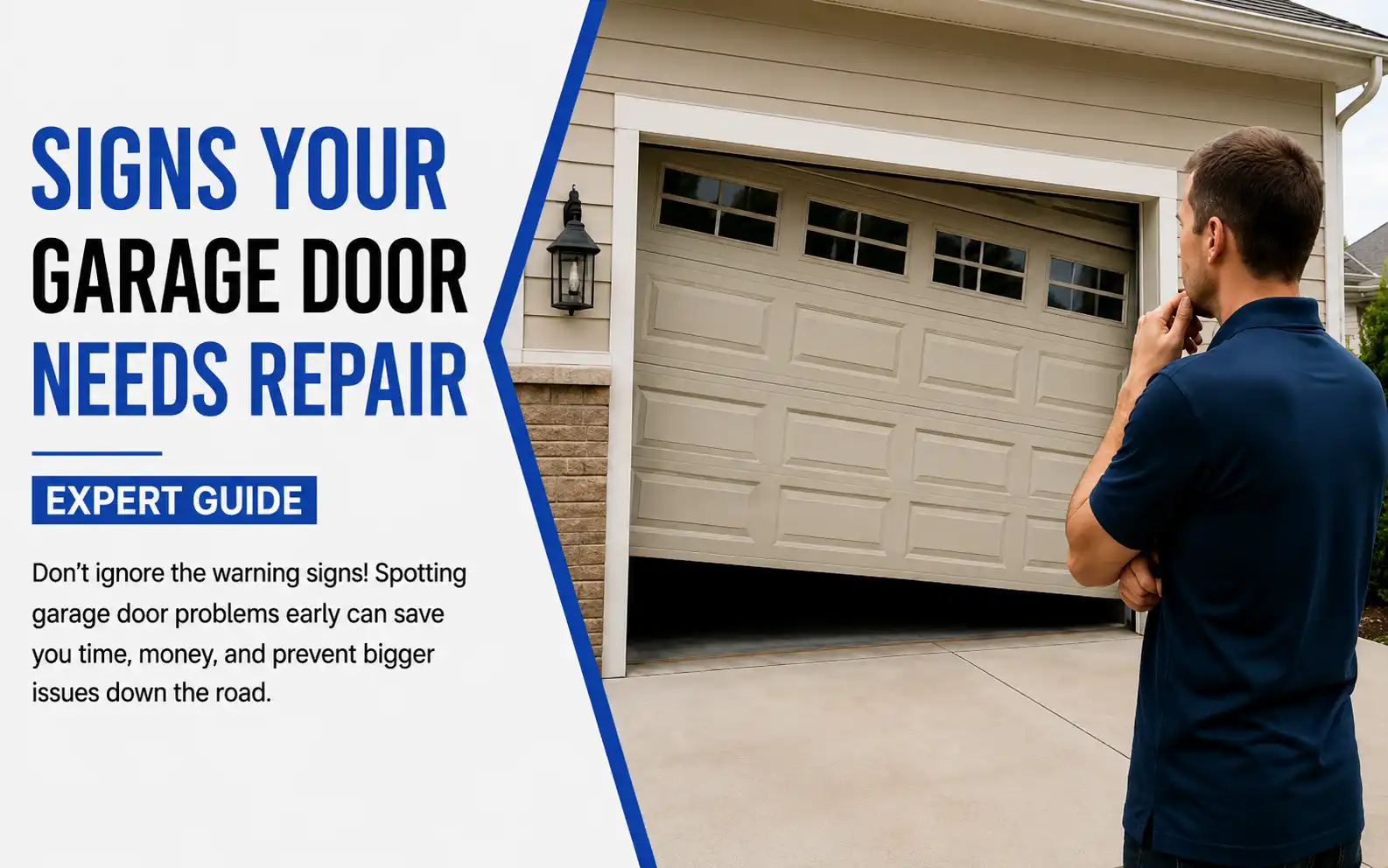

Your garage door needs repair when it makes loud grinding noises, moves unevenly, sags on one side, or stops responding to the remote. In Houston, TX, these signs often show up faster because heat and humidity stress springs, cables, and openers year-round. This guide from WeFix Garage Door Repair walks through every warning sign, what causes it, and when to call a professional instead of waiting.
What Does It Mean When a Garage Door Needs Repair?
A garage door needs repair when any part of the system, the spring, track, cable, opener, or sensor, stops working the way it should. The garage door is the largest moving object in most homes, and it relies on a balance of springs and cables under real tension. When one part fails, the whole system becomes unsafe to operate.
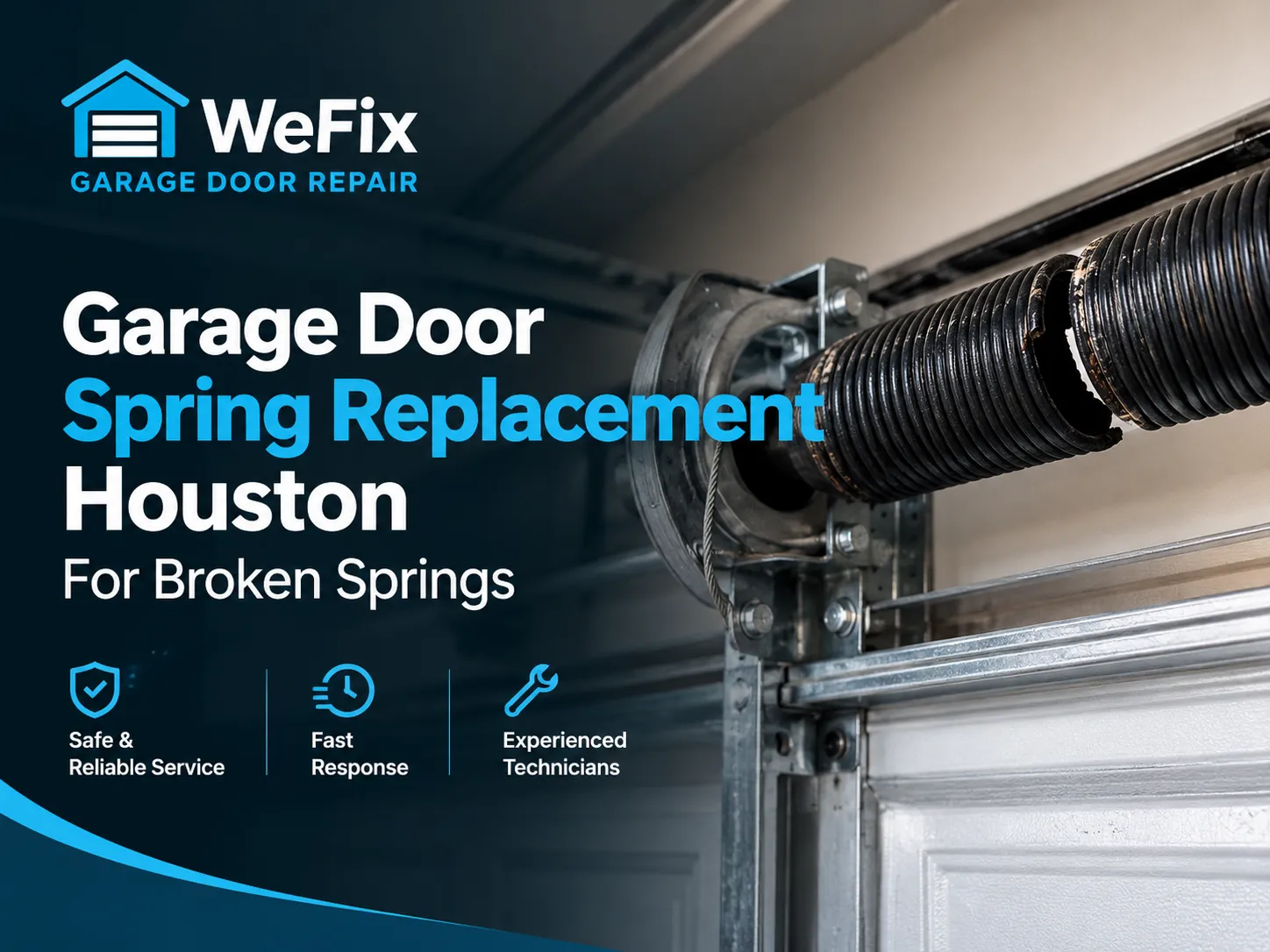
Most residential garage doors use torsion or extension springs to counterbalance the door’s weight, which is why a single broken spring can make the door impossible to lift safely by hand.
Why Recognizing Garage Door Warning Signs Matters
Recognizing warning signs early prevents a small garage door repair from becoming an expensive emergency. A garage door stuck halfway or a broken garage door emergency can trap a car inside, block deliveries, or leave your home exposed to weather and intruders. In Houston’s climate, humidity and heat cause metal expansion and lubricant breakdown faster than in drier regions, so regular garage door maintenance matters more here than in most parts of the country.
• Safety: A failing spring or cable under tension can snap and cause injury.
• Cost control: Small issues like worn rollers cost far less to fix than a full replacement.
• Convenience: A working door means your car and home stay accessible every day.
• Security: A door that won’t fully close leaves your garage and home vulnerable.
7 Signs Your Garage Door Needs Repair
These are the most common signs Houston homeowners notice before calling a professional:
1. Loud grinding or banging noises. Worn rollers, loose hardware, or a bent track usually cause this and need garage door roller repair.
2. The door won’t open or close. This often means a broken spring, opener failure, or sensor issue. Review why your garage door won’t close for a deeper breakdown.
3. The door is off track. A bent track or broken cable can knock the door off its rails, which is a garage door stuck emergency in most cases.
4. It sags or moves unevenly. One side lifting faster than the other usually points to a broken spring or worn cable.
5. It responds slowly to the remote. Weak sensors or an aging opener often cause delayed response and need garage door sensor or opener repair.
6. Visible wear on panels or hinges. Cracked panels or loose hinges reduce insulation and structural strength over time.
7. The door reverses for no reason. Misaligned safety sensors are a common and often simple fix.
Benefits of Fixing Garage Door Problems Early
Addressing garage door issues as soon as they appear pays off in several ways:
• Lower repair costs: A $150 roller fix now can prevent a $600 track replacement later.
• Extended door lifespan: Regular repair and maintenance can add years to a garage door’s service life.
• Fewer emergency calls: Catching wear early reduces the odds of a night broken garage door emergency.
• Better home value: A well-maintained garage door supports curb appeal and resale value.
Common Garage Door Mistakes Homeowners Make
Avoid these mistakes that turn small problems into major repairs:
• Ignoring noise: Grinding or banging rarely goes away on its own and usually gets worse.
• Attempting spring repair alone: Springs are under high tension and cause serious injury if handled incorrectly. See our guide on spring repair vs replacement.
• Forcing a stuck door: Manually forcing a stuck door can bend the track or snap a cable completely.
• Skipping inspections: An annual garage door inspection catches wear before it becomes a breakdown.
• Choosing a handyman over a specialist: Compare the risks in our guide on handyman vs professional garage door repair.
Garage Door Repair Cost Factors in Houston
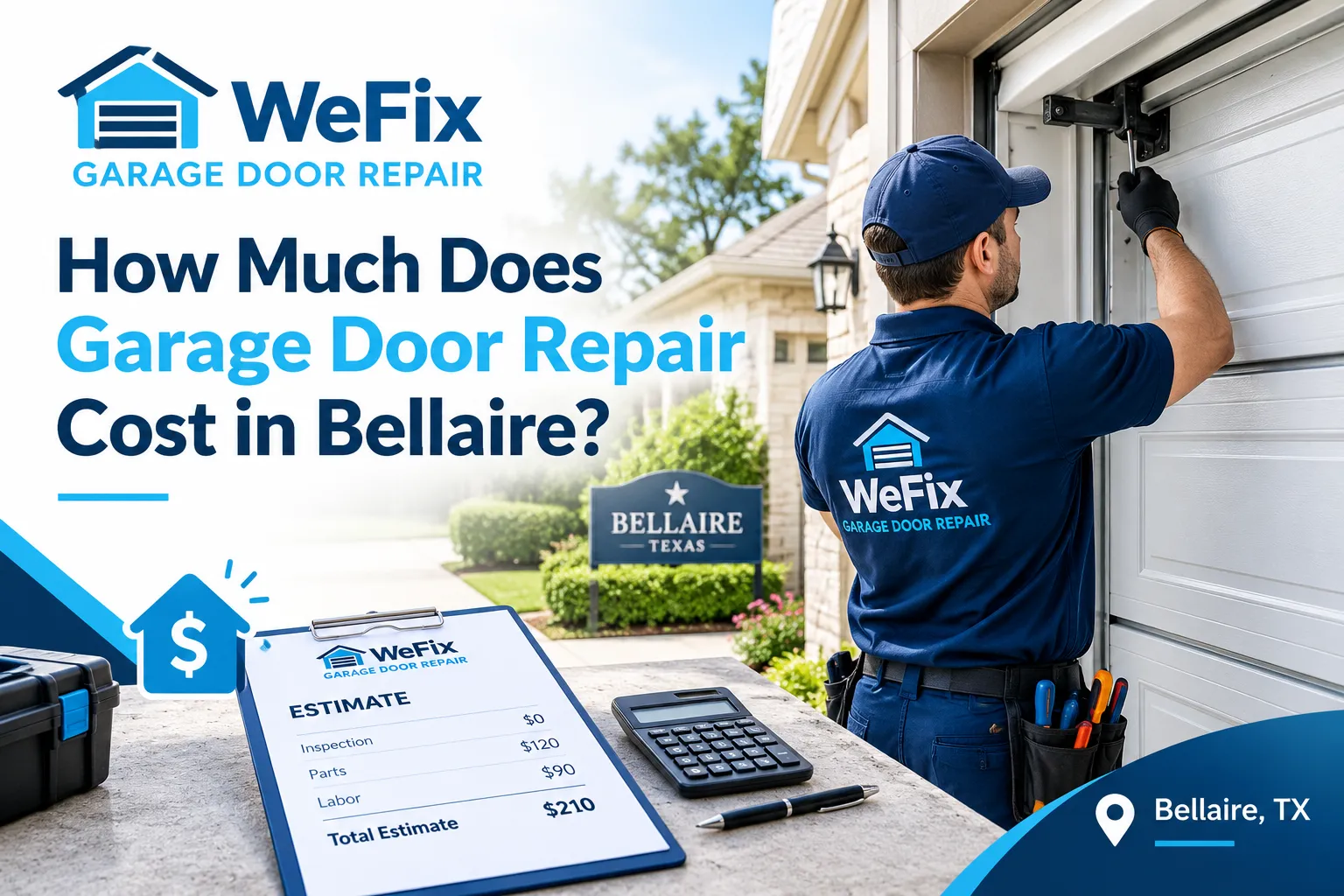
Garage door repair cost depends on which part failed, the door’s size and material, and whether the visit is scheduled or an emergency garage door service. Simple fixes like sensor realignment cost far less than full spring replacement, while track and cable damage from a collision usually costs more than routine wear repairs.
Same day garage door repair or 24 hour garage door repair calls, especially weekend garage door repair, typically cost more than scheduled weekday appointments. Review our full garage door repair cost guide for a complete breakdown by repair type.
How to Choose the Right Garage Door Repair Solution
Match the sign you’re seeing to the right type of repair using this quick reference:
| Sign | Likely Cause | Repair Needed |
| Loud grinding or banging | Worn rollers, bent track, or loose hardware | Garage door roller repair or track repair |
| Door won’t open or close | Broken spring, sensor misalignment, opener failure | Garage door spring repair or opener repair |
| Door is off track | Bent track, broken cable, or collision damage | Garage door track repair or cable repair |
| Sags or uneven movement | Broken spring or worn cable on one side | Spring repair or cable repair, same day if urgent |
| Slow response to remote | Weak sensor signal or aging opener | Garage door sensor repair or opener repair |
Many Houston homeowners research symptoms on sites like Home-Maintenance-and-Repair before calling a technician. If you’re unsure whether to repair or replace, our garage door replacement guide and installation cost breakdown can help you compare against repair pricing before deciding.
Frequently Asked Questions
What are the most common signs a garage door needs repair?
The most common signs are loud grinding noises, a door that won’t open or close, uneven movement, sagging on one side, and slow response to the remote. Any of these signs point to a specific mechanical issue, such as a worn roller, broken spring, or misaligned sensor, that needs professional attention.
Is it safe to use a garage door that’s making noise?
It’s safe for a short time, but ignoring noise risks a bigger failure. Grinding or banging usually means a part is wearing out, and continued use can turn a simple roller or hinge repair into a full track or spring replacement. Schedule repair as soon as you notice the noise.
How much does emergency garage door repair cost in Houston?
Emergency garage door repair costs more than scheduled service because of after-hours and weekend rates. Exact pricing depends on the part involved, but same day and 24 hour emergency service typically carries a premium over standard daytime appointments.
Can I repair my garage door myself?
Some minor fixes, like tightening loose hardware, are safe for homeowners. However, spring, cable, and track repairs involve high tension components that can cause serious injury. Professional repair is strongly recommended for anything beyond basic maintenance.
How long does a typical garage door repair take?
Most garage door repairs take one to three hours, depending on the issue. Learn more in our guide on how long garage door repair takes. Complex repairs involving full track replacement or opener installation may take longer.
Get Your Garage Door Fixed Before It Fails Completely
Catching the signs your garage door needs repair early saves money, prevents safety risks, and keeps your home secure. WeFix Garage Door Repair provides professional, same day, and emergency garage door repair across Houston, TX, from spring and cable repair to full opener replacement. Contact WeFix Garage Door Repair today to schedule an inspection and keep your garage door running safely all year.