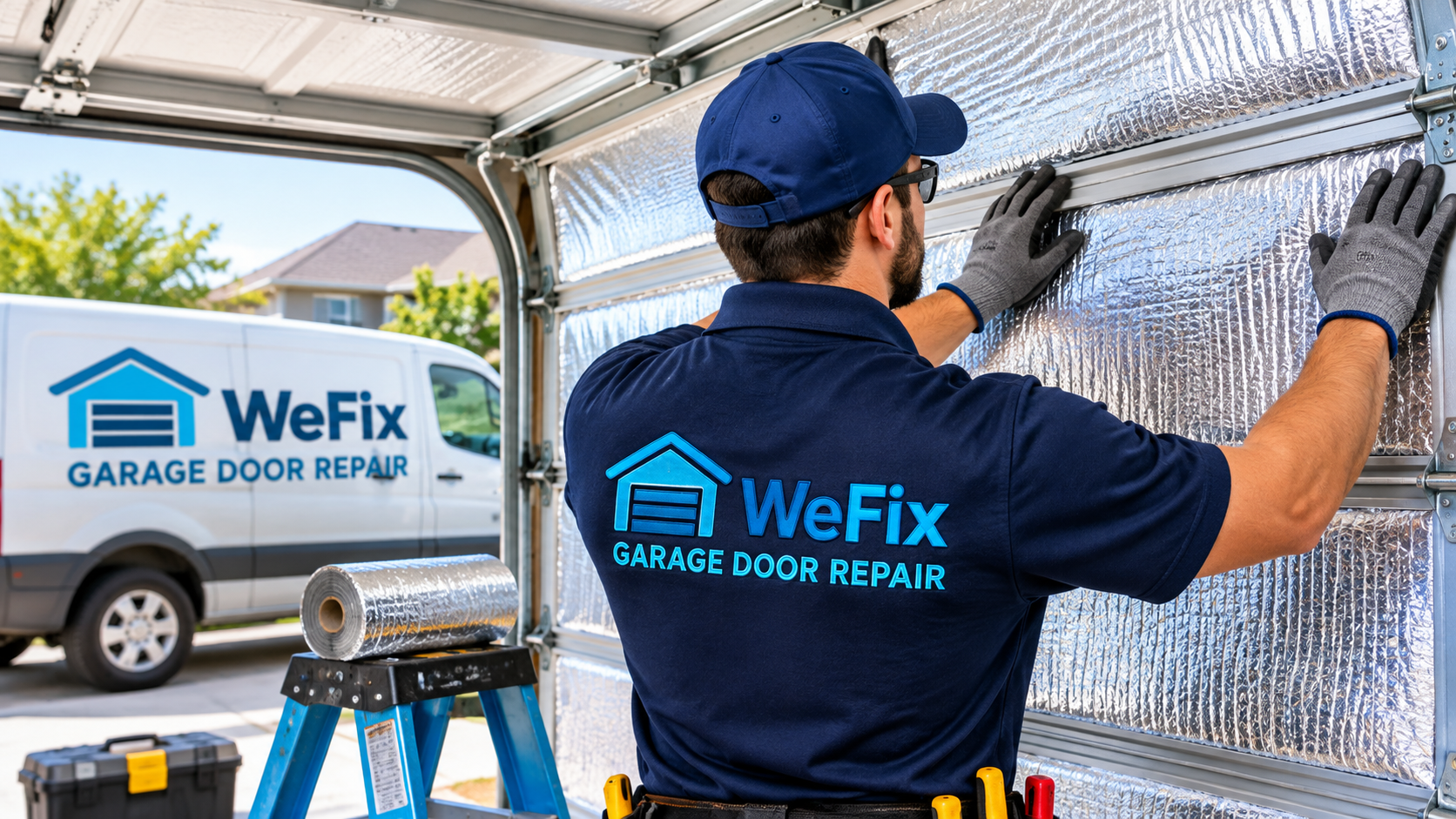

Houston homeowners deal with long, hot summers and strong afternoon sun. An uninsulated garage door can allow substantial heat into the garage, making the space uncomfortable. WE Fix Garage Door Repair helps homeowners assess insulation options based on their garage layout, door condition, and budget.
The value of an insulated door depends on how you use your garage. Does it share a wall with your kitchen or living room? Is there a bedroom directly above it? Do you spend time working on projects inside? These details can make insulation more useful.
Garage door insulation can reduce heat transfer through the door panels. It can improve comfort, reduce outside noise, and make the door feel more solid. It will not cool a garage like an air conditioner. The strongest results come when the door, walls, ceiling, and seals work together.
Why Houston homeowners consider garage door insulation
Houston’s summer temperatures make garage heat a regular concern. NOAA’s 1991–2020 climate normals record average daily highs of 94.5°F in July and 94.9°F in August at Houston Intercontinental Airport. Those figures help explain why a sun-facing garage can become uncomfortable during the afternoon.
A metal garage door absorbs solar heat. An uninsulated door can transfer some of that heat into the garage. The effect can be more noticeable when the door faces west or south and receives direct sunlight for several hours.
An attached garage deserves extra attention. Heat can pass from the garage through shared walls, ceilings, and gaps around the door opening. Rooms above the garage may feel uncomfortable if the floor assembly lacks proper insulation and air sealing.
The U.S. Department of Energy’s Building America Solution Center recommends air sealing and insulating the areas between an attached garage and the home’s conditioned rooms. This includes gaps around rim joists and other openings. Insulating the door alone cannot fix every heat-transfer problem.
You may gain the most from an insulated door if:
- Your garage connects directly to the house.
- A bedroom or living area sits above the garage.
- You use the garage as a workshop or hobby space.
- Your current door has thin, single-layer steel panels.
- The garage door receives direct afternoon sunlight.
A detached garage used only for parking may not need a premium insulated door. A basic upgrade could be enough if comfort inside the garage is not a concern.
Insulation types, materials, and R-values
Garage doors come with different insulation materials and construction styles. The two common foam types are polystyrene and polyurethane. Both slow heat transfer, but they differ in cost, fit, and performance.
Polystyrene comes in rigid foam boards. Manufacturers fit these boards inside the door sections. This option costs less and can improve a basic steel door. It suits homeowners who want a moderate insulation upgrade without paying for a premium door.
Polyurethane foam expands inside the door section. It fills the space between the steel skins and bonds to the panels. This construction can provide a higher R-value in a similar thickness. It can make the door more rigid and reduce operating noise.
Raynor’s published product information lists polystyrene door ratings from about R-5 to R-10.25. Its polyurethane options range from R-12 to R-18. Actual ratings vary by door model and construction.
The R-value measures resistance to heat flow. A higher number indicates more resistance through the rated material or section. Yet a garage door has joints, hinges, edges, windows, and seals. These areas affect the performance of the complete door.
DASMA Technical Data Sheet 163 explains the difference between a calculated section R-value and a tested whole-door U-factor. In a 2022 industry interview, DASMA Technical Director Dave Monsour explained that U-factor measures the thermal performance of the installed door assembly. The R-value calculation applies to an individual door section. Ask the installer for tested U-factor information when comparing models.
| Door option | Typical rating | Main benefit | Best use |
|---|---|---|---|
| Single-layer steel | No meaningful insulation rating | Lowest initial cost | Detached garages |
| Polystyrene insulated door | Around R-5 to R-10 | Moderate heat resistance | Budget-conscious upgrades |
| Polyurethane insulated door | Around R-12 to R-18 | Higher insulation and panel strength | Attached garages |
| Retrofit foam kit | Varies by kit | Lower-cost panel upgrade | Doors in sound condition |
A retrofit kit can suit a door that is structurally sound and has enough space for the panels. It may not provide the same fit or full-door performance as a factory-insulated model. Check the kit’s weight and compatibility before installation.
How professional garage door insulation works
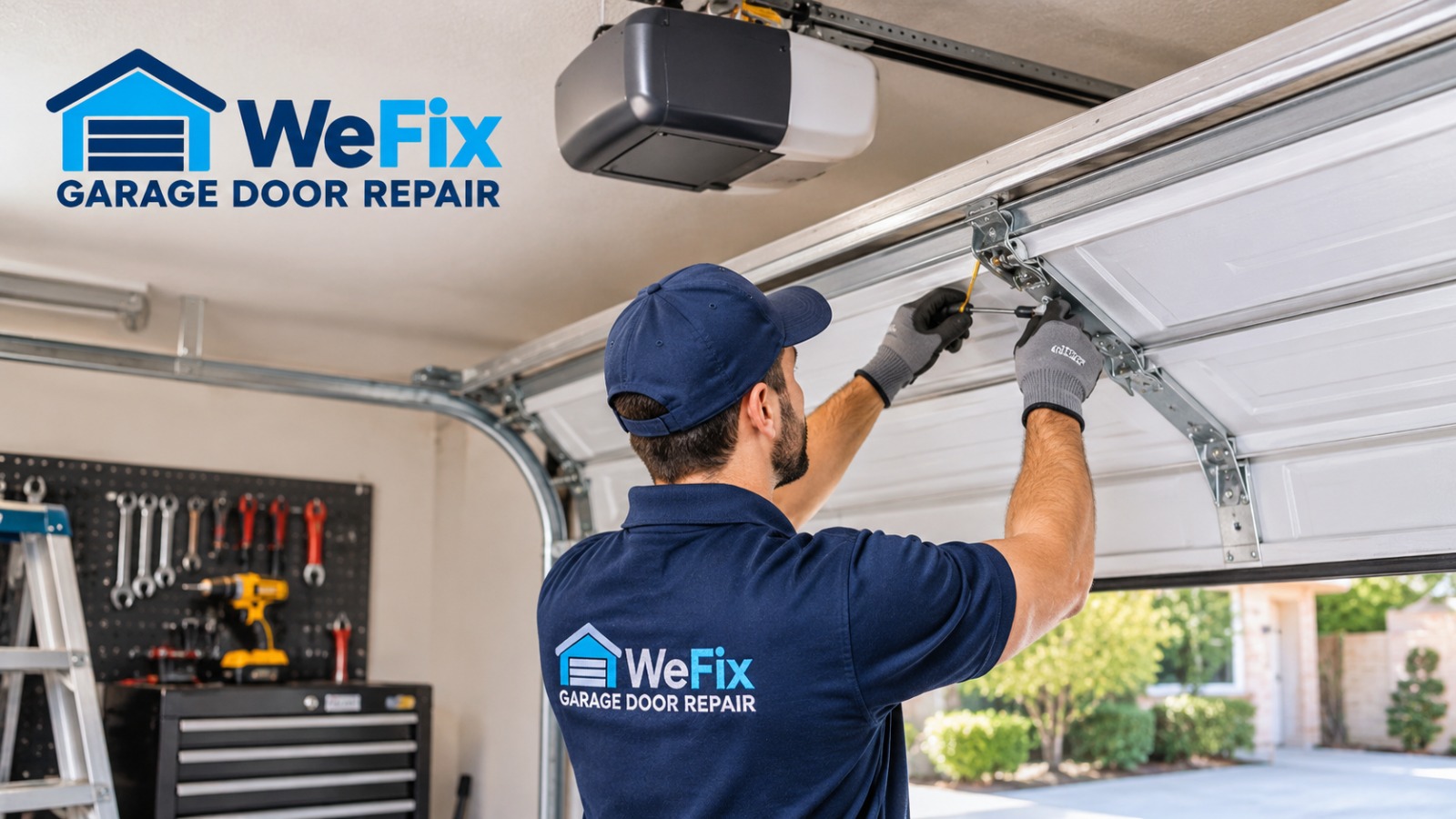
A proper installation starts with an inspection. The technician checks the door material, panel condition, springs, hinges, rollers, tracks, and opener. This matters because insulation adds weight to the door.
Next, the technician checks the door’s dimensions and construction. Some doors accept insulation panels. Others need a factory-insulated replacement because their design does not support a safe retrofit.
The work usually follows these steps:
- Inspect the door panels, frame, tracks, springs, and opener.
- Confirm whether the existing door can support an insulation kit.
- Compare polystyrene, polyurethane, and replacement options.
- Fit the approved insulation or install the new door sections.
- Check the bottom seal and side weatherstripping.
- Test door balance, opener operation, and safety features.
A homeowner in west Houston may have a double garage door that faces the afternoon sun. The door is in good condition, but the garage becomes uncomfortable by late afternoon. A technician may recommend a suitable insulation kit if the door can safely carry the added weight. If the panels are damaged or poorly sealed, a factory-insulated replacement may make more sense.
Air sealing deserves attention during the job. A new insulated door cannot stop drafts through worn bottom seals or gaps around the frame. The technician should check these areas and explain any repairs needed.
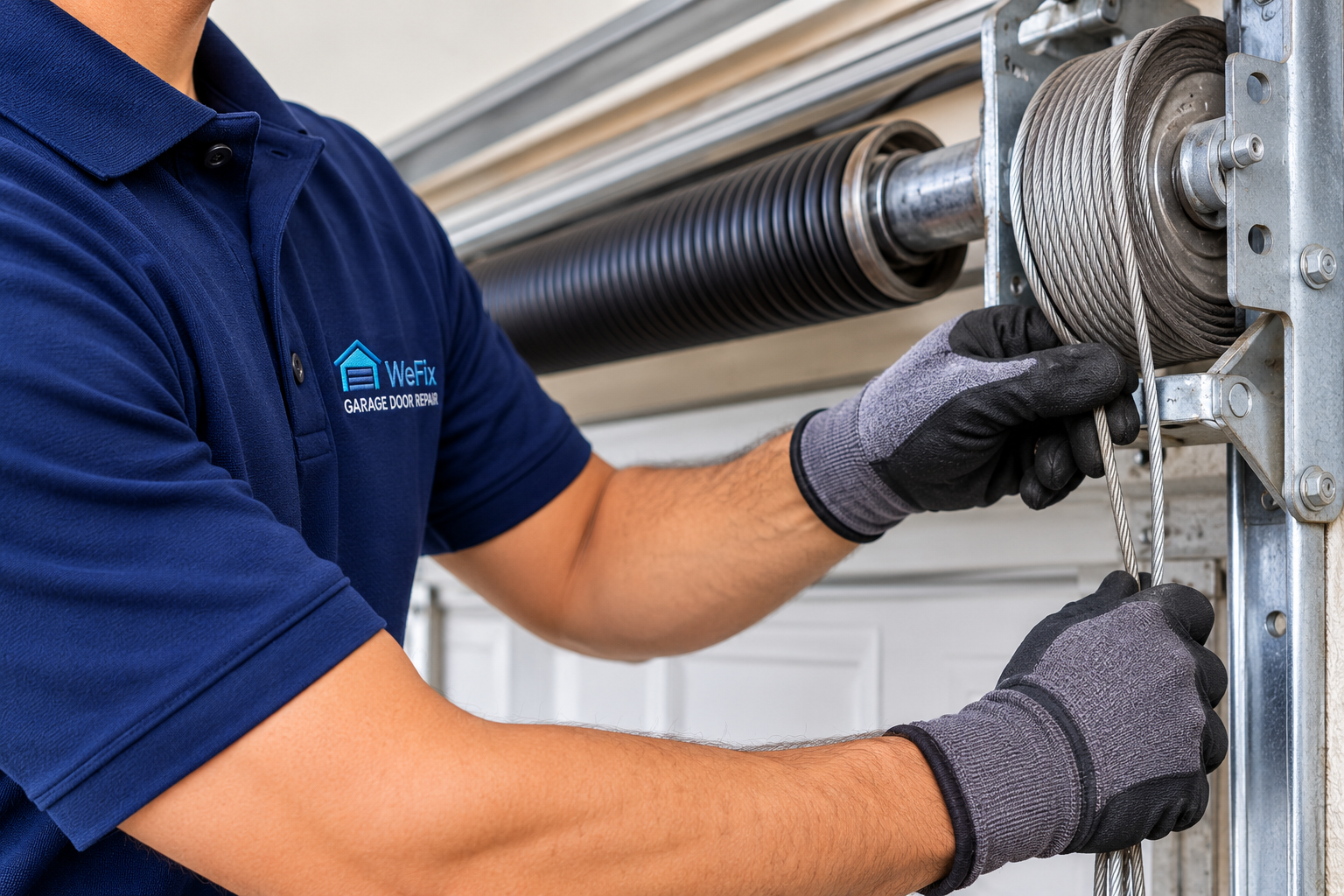
Never add heavy insulation panels without checking the spring balance. Extra weight can strain the opener and affect door movement. A trained garage door technician should adjust the system when required.
Garage door insulation costs in Houston
The final price depends on door size, insulation type, existing condition, and labour. A single-car door usually costs less to upgrade than a double-car door. Custom styles, windows, damaged panels, and hardware changes can raise the total.
WE Fix Garage Door Repair lists these Houston-area price ranges for insulation work:
| Project type | Published price range |
|---|---|
| Single-car door insulation retrofit | $200–$400 |
| Double-car door insulation retrofit | $300–$600 |
| Single-car polyurethane door replacement | $900–$1,800 |
| Double-car polyurethane door replacement | $1,200–$2,800 |
| Single-car polystyrene door replacement | $700–$1,400 |
| Double-car polystyrene door replacement | $900–$2,200 |
These figures are planning estimates, not a fixed quote for every property. Ask for a written price after the door has been inspected.
Several details can change your final cost. A damaged panel may need replacement before insulation work begins. A heavier door may need different springs. A worn opener may need service or replacement if it cannot handle the door’s weight.
Door seals and frame condition matter too. Replacing a bottom seal or side weatherstripping may add to the project price, but it can help reduce drafts and moisture entering the garage.
Do not judge the investment by energy savings alone. Garage door insulation may improve comfort and reduce noise, but the savings on your electricity bill depend on the home. A detached garage with no air-conditioned rooms nearby may show little effect on household cooling costs.
Choosing a garage door insulation contractor in Houston
A suitable contractor should inspect the complete door before recommending insulation. Ask whether your current door can safely support a retrofit kit. Request details about the material, expected R-value, warranty, and any changes to springs or opener settings.
Ask for a clear breakdown of labour and materials. The quote should state whether it includes new seals, hardware adjustments, removal of the old door, and disposal. You should know what the price covers before work begins.
Check the contractor’s experience with insulated garage doors. A general handyman may fit foam panels, but garage doors rely on correctly balanced springs and working safety systems. A door that carries extra weight without proper adjustment can become unsafe.
Companies such as WE Fix Garage Door Repair handle garage door insulation and related door work in Houston. When comparing this provider with a general handyman or a large national chain, ask about local service experience, door compatibility checks, spring adjustment, and post-installation testing. These details help you compare the actual work rather than relying on broad advertising claims.
Houston projects may fall under different rules depending on the work and property location. The City of Houston lists the 2021 International Residential Code and 2021 International Energy Conservation Code among its adopted residential construction codes, with local amendments. A simple insulation retrofit may be treated differently from a full door replacement or structural alteration. Confirm permit requirements with the relevant building department before work starts, especially if your property is outside Houston city limits.
Frequently asked questions
Is garage door insulation in Houston worth the cost?
It can be worthwhile for attached garages, rooms above garages, and spaces used as workshops. Insulation slows heat transfer through the door and can improve comfort. A detached garage used only for parking may not need a premium model. Check the condition of the walls, ceiling, and seals before deciding.
How much does garage door insulation cost in Houston?
A retrofit kit for a single-car door may cost around $200–$400 based on WE Fix Garage Door Repair’s published price range. A double-car retrofit may cost around $300–$600. Factory-insulated door replacement costs more. Door size, material, labour, and hardware changes affect the final quote.
What is the best R-value for a garage door in Houston?
The right rating depends on your garage and budget. Polystyrene doors commonly fall around R-5 to R-10, while polyurethane models can reach R-12 to R-18. An attached garage may benefit from a higher-rated model. Ask for the tested U-factor too, since a section R-value does not describe the complete installed door.
Does an insulated garage door reduce heat in an attached home?
It can reduce heat transfer through the garage door, which may help rooms next to or above the garage. The result depends on the shared walls, ceiling insulation, air leaks, and door exposure. Air sealing the boundary between the garage and living areas is another key part of the work.
Is polystyrene or polyurethane better for Houston heat?
Polyurethane usually provides a higher R-value in a similar door thickness. It expands inside the panel and bonds to the steel skins. Polystyrene costs less and can suit garages with moderate comfort needs. Compare the exact door model, warranty, and tested thermal rating before choosing.
Can I install a garage door insulation kit myself?
Some kits are designed for homeowner installation, but check the door’s construction and the kit instructions first. Added weight can affect springs, balance, and opener operation. Never adjust torsion springs yourself. Ask a garage door technician to check the system after the panels have been fitted.
Will garage door insulation lower my Houston electricity bill?
It may help reduce heat transfer into an attached garage, but it does not guarantee a lower bill. The result depends on how much the garage affects the home’s cooling load. Poor wall insulation, ceiling gaps, and worn door seals can limit the benefit of an insulated door.
How long does garage door insulation last?
Factory-installed foam can last for many years when the door stays in good condition. Its service life depends on the panel construction, moisture exposure, impact damage, and hardware condition. Check the manufacturer’s warranty and inspect the door seals and panels during routine maintenance.
Do I need a permit to insulate or replace a garage door in Houston?
Permit requirements depend on the work and the property’s jurisdiction. Houston has adopted local versions of the 2021 International Residential Code and 2021 International Energy Conservation Code. Contact the Houston Permitting Center or your local building department before a full replacement or alteration.
Is insulation useful for a detached garage in Houston?
It can help if you use the garage as a workshop, gym, or storage space for heat-sensitive items. If you only park a vehicle inside, the extra cost may not provide much practical benefit. A basic door with sound seals may be enough for that use.
A practical next step for your garage
Start by checking how the garage connects to your home and how much direct sun reaches the door. Then compare a retrofit kit with a factory-insulated model. Ask about door weight, spring balance, seals, and the complete installed thermal rating before approving the work. If you want help reviewing the options, contact WE Fix Garage Door Repair for an assessment and a clear quote. A suitable upgrade should match your property and the way you use the garage.