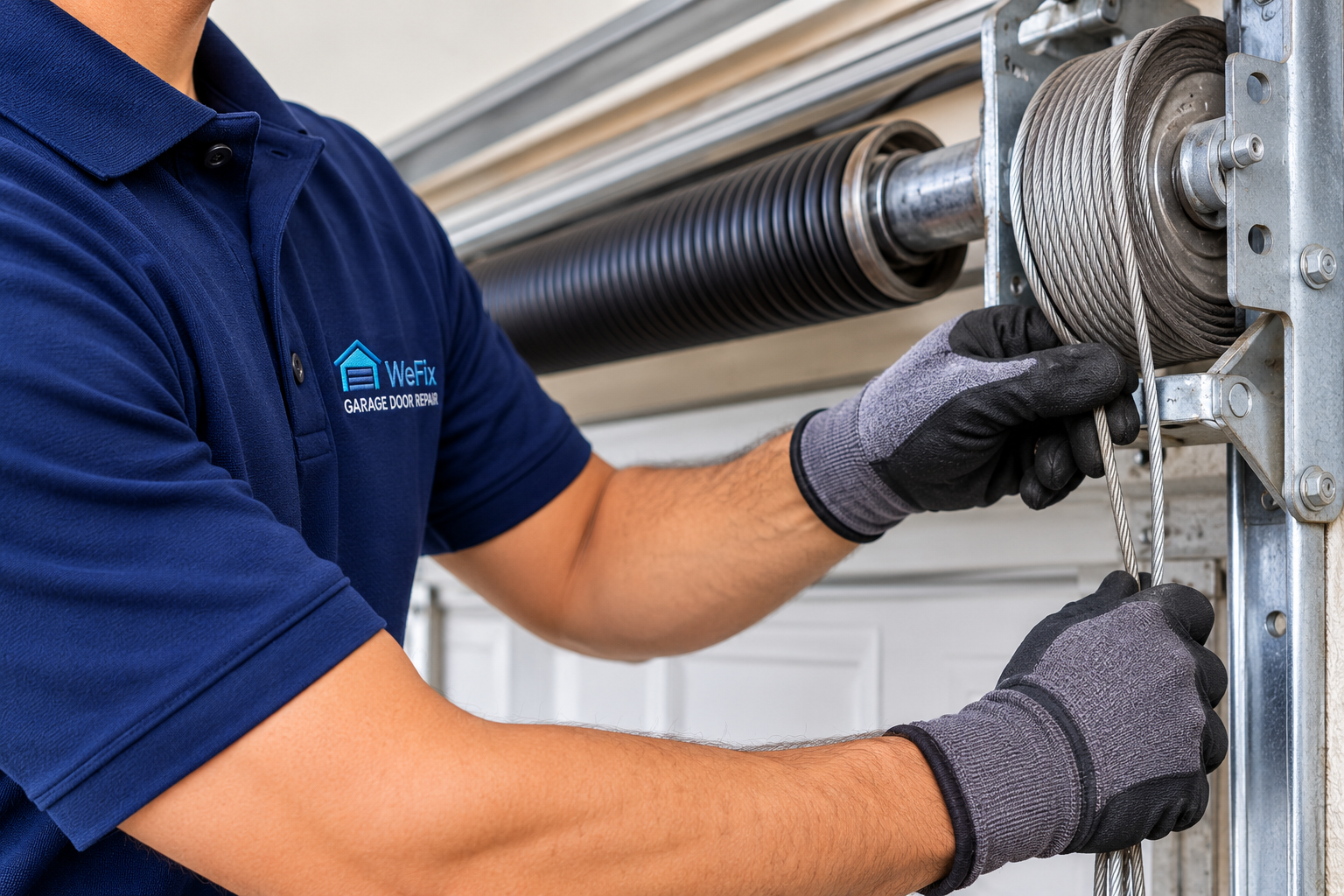

A garage door that hangs unevenly or suddenly stops moving can point to a cable problem. WE Fix Garage Door helps homeowners understand common garage door faults and the repairs needed to keep their systems working safely. Lift cables play a major role in supporting the door as it opens and closes. When one becomes worn, loose, or damaged, the door can lose its balance and become difficult to operate.
Many homeowners overlook cable wear until the door starts making unusual noises or moves at an angle. Could a small damaged cable cause a major garage door problem? Yes. A cable failure can affect the springs, drums, rollers, and other parts connected to the lifting system.
Garage door cable replacement restores the lifting system when cables no longer work safely. Knowing the early warning signs can help you arrange professional service before the damage spreads. This guide explains why cables fail, how technicians replace them, what repairs may cost, and how to care for your garage door.
Why garage door lifting cables matter
A residential garage door can weigh hundreds of pounds. Its lifting system needs properly fitted cables to move that weight in a controlled way. The cables work with the springs and drums to support the door during each opening and closing cycle.
Most sectional garage doors use two lifting cables. One runs along each side of the door. Each cable connects near the bottom of the door and winds around a drum near the top of the torsion spring system.
When the door opens, the springs release stored energy and help lift its weight. The drums guide the cables as they wind and unwind. When the door closes, the cables move in the opposite direction.
What happens if one cable stops working? The door may tilt, jam, or place extra pressure on the remaining cable. This can damage other components and make the door unsafe to operate.
Common reasons for cable failure include:
- Normal wear: Repeated opening and closing can weaken steel strands over time.
- Rust and corrosion: Moisture can damage exposed cable wires.
- Incorrect cable tension: Poor adjustment can cause uneven lifting.
- Damaged drums: Worn grooves can prevent cables from winding correctly.
- Spring problems: Weak or broken springs can affect cable movement.
- Poor installation: Incorrect cable size or fitting can cause early failure.
Regular inspections help identify these problems before a cable snaps. A technician can check cable condition, spring balance, drum alignment, and the door’s movement during a service visit.
Warning signs that your garage door cables need attention
Small changes in door movement can reveal a developing problem. You do not need to wait until a cable breaks to arrange an inspection.
One of the clearest signs is an uneven door. If one side rises faster than the other, a cable may have stretched, slipped, or become damaged. The door may hang at an angle when it stops.
Look closely at the visible cable sections without touching them. Do you notice loose strands, rust, or a cable that appears thinner in one area? These signs can point to wear that needs professional attention.
Other warning signs include:
- Frayed or broken steel strands near the bottom bracket.
- A loose cable hanging beside the garage door.
- A loud bang followed by a door that will not move.
- The door stopping halfway through its travel.
- A cable slipping away from its drum.
- Unusual grinding or scraping sounds during operation.
A sudden loud bang can come from a broken spring rather than a cable. Both faults can affect the lifting system, so a full inspection matters.
Never pull a loose cable back into place. Do not attempt to wind it around the drum or adjust the spring tension. The stored force in the lifting system can cause serious injury.
Stop using the garage door if a cable is broken or hanging loose. Keep children and pets away from the area. Contact a trained garage door technician to inspect the system.
Types of garage door cables and replacement options
Different garage door systems use different cable arrangements. Choosing the correct replacement depends on the door’s weight, height, spring system, and original cable specifications.
Torsion spring systems usually use lift cables attached to drums at the top corners. Extension spring systems use a different arrangement and may include separate safety cables. A technician must identify the system before selecting replacement parts.
Here are four common cable types and their uses:
| Cable type | Main feature | Common application | Maintenance need |
|---|---|---|---|
| Standard lift cable | Steel wire construction | Residential sectional doors | Regular wear checks |
| Aircraft-style cable | Multiple braided steel strands | Heavy-duty lifting systems | Inspect for fraying |
| Extension spring safety cable | Runs through the extension spring | Extension spring doors | Check for damage |
| High-cycle replacement cable | Designed for repeated operation | Frequently used doors | Routine inspections |
The cable’s diameter and length must match the door system. A cable that looks similar may still have the wrong load capacity or dimensions.
For example, a homeowner with a double garage door may notice that the left side drops lower than the right. The technician finds a damaged lift cable and checks the matching cable, drums, and springs. Replacing the appropriate cable set and correcting the underlying imbalance can restore even movement.
Should you replace one cable or both? Technicians often recommend replacing both lift cables when they have similar age and wear. This helps reduce the chance of another cable failure soon after the first repair.
Extension spring systems need their own safety checks. The safety cable helps contain a spring if it breaks. A damaged safety cable should receive prompt attention.
The professional garage door cable replacement process
Cable replacement requires more than removing an old wire and fitting a new one. The technician must control the door’s weight and manage the stored spring tension throughout the repair.
A professional service visit normally follows these steps:
- System inspection: The technician checks the door, cables, drums, springs, brackets, and tracks. They identify the failed component and look for related damage.
- Door securing: The technician secures the door and prepares the lifting system for safe work. They use suitable tools and procedures to control stored spring energy.
- Old cable removal: The damaged cable is removed after the system has been made safe. The technician checks the attachment points and cable drum for wear.
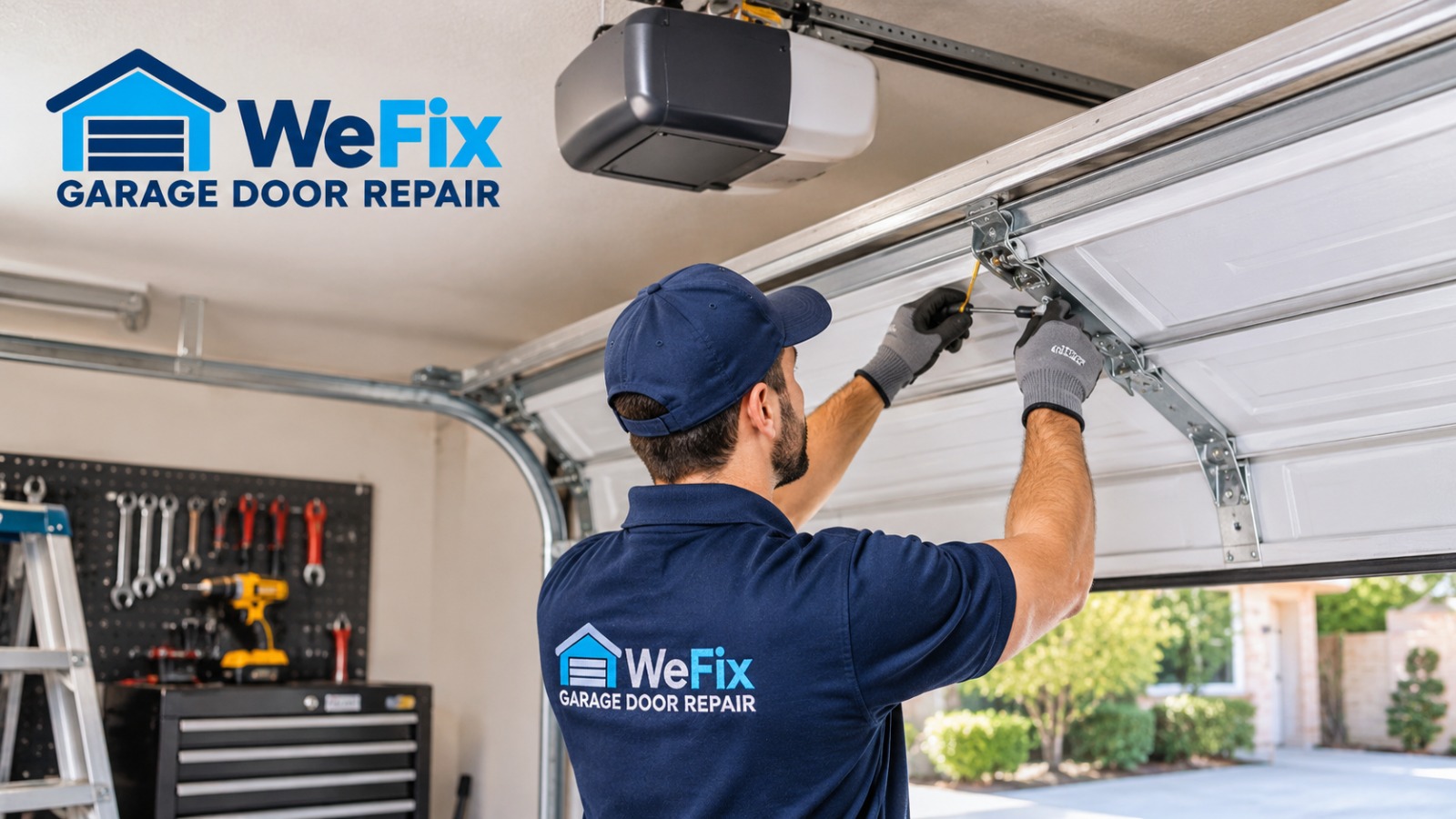
- Replacement fitting: A correctly sized cable is installed and attached to the specified points. The technician checks its routing and position.
- Tension and balance checks: The lifting system is adjusted according to the door and spring specifications. Both sides must work together during movement.
- Final operation test: The technician checks smooth travel, door balance, opener operation, and safety features before completing the job.
The final inspection matters because cable problems can be linked to worn springs or damaged drums. Replacing a cable without checking these parts may allow the same fault to return.
Garage door cable replacement costs and pricing factors
Repair costs depend on the cable system, the extent of the damage, and the labour required. A basic cable replacement usually costs less than a repair that involves springs, drums, or damaged brackets.
According to Angi’s 2026 cost guide, garage door cable repair averages around $225 across the United States. Most homeowners pay between $100 and $350, though complex repairs can reach $650.
Here is a general cost comparison based on published US estimates:
| Service type | Estimated cost |
|---|---|
| Cable inspection and adjustment | $75–$200 |
| Single cable replacement | $150–$250 |
| Both lift cables replacement | $200–$350 |
| Cable and drum repair | $200–$400 |
| Emergency cable replacement | $250–$350+ |
| Cable and spring replacement | $300–$650 |
These figures are general estimates, not fixed prices. Local labour rates and the door’s design can change the final amount.
Several factors affect the total repair bill.
Cable material and size: Heavy garage doors may need thicker cables with higher load ratings. Longer doors may need longer cables.
Number of damaged parts: A technician may find worn drums, loose brackets, damaged rollers, or weak springs during the inspection. These parts can increase the repair cost.
Labour requirements: Cable replacement takes careful preparation and specialist tools. A complicated lifting system may need more time.
Emergency appointments: Same-day or after-hours service can cost more than a scheduled visit.
Door condition: Older doors may have worn hardware that needs attention during the repair.
Ask for an itemised estimate before approving the work. It should explain the replacement parts, labour charges, service fees, and warranty coverage. This makes it easier to compare quotes from different providers.
How to choose a qualified garage door repair technician
Choosing a repair company requires attention to safety, experience, and clear pricing. A low quote may not include the full repair or the checks needed to protect your door.
Start by checking the technician’s experience with your type of lifting system. Ask whether they handle torsion spring cables, extension spring safety cables, and heavy residential doors.
You should check the following points before booking:
- Experience: Ask how often the technician handles cable replacement jobs.
- Insurance: Confirm that the company carries suitable business insurance.
- Written estimates: Request a breakdown of parts, labour, and additional fees.
- Replacement parts: Ask whether the cables match your door’s specifications.
- Warranty: Check the coverage for parts and workmanship.
- Safety testing: Confirm that the technician checks door balance and opener safety features.
A qualified technician should explain why the cable failed. They should not recommend replacing the entire door without showing evidence of serious damage.
Local rules can matter too. In the United States, garage door opener safety requirements are addressed by UL 325 and federal regulations under 16 CFR Part 1211. These standards focus on automatic opener safety and entrapment protection. Local building departments may have additional requirements for major alterations or electrical work.
The Consumer Product Safety Commission has also addressed the risks associated with automatic garage door entrapment. Its safety requirements include protection against contact with obstructions. A cable replacement technician should check the door’s operation and safety features as part of the service.
WE Fix Garage Door can be included in your comparison when researching cable repair providers. Ask about its cable replacement process, technician qualifications, parts, and warranty terms. Compare those details with other companies before choosing a service.
A specialist should be able to explain the cause of failure in plain language. They should show you which components need attention and which remain in good condition.
Practical tips to prevent garage door cable damage
Good maintenance can help extend the working life of your garage door cables. It cannot prevent every failure, but regular checks can reveal early signs of wear.
Start with a visual inspection from a safe distance. Look for rust, fraying, loose strands, or a cable that no longer sits correctly on its drum. Never touch a damaged cable or try to adjust its tension.
Keep the tracks and surrounding areas clear of dirt and objects. Check the manufacturer’s instructions before applying lubricant to moving parts. Some components need specific products, and cables should not receive random sprays or grease.
You can follow these basic maintenance habits:
- Check visible cables for rust and broken strands.
- Listen for new noises during normal door operation.
- Keep the tracks clear of dirt and debris.
- Test the opener’s safety features according to its manual.
- Arrange professional inspections when the door moves unevenly.
- Address spring and drum problems before they cause further damage.
The UL Standards & Engagement 2025 pilot impact assessment examined historical garage door incident records. Its analysis of the Consumer Product Safety Risk Management System data found that recorded entrapment incidents fell from 104 in the decade before dual entrapment protection requirements to 66 in the following decade. That represents a decrease of nearly 37%.
These figures relate to garage door entrapment protection, not cable failures. They show why safety features and correct system operation deserve attention during garage door service.
Frequently asked questions
What causes a garage door cable to break?
Garage door cables can break because of age, rust, frayed steel strands, poor tension, or damaged drums. Repeated opening and closing can weaken the cable over time. Broken springs can create extra stress on the lifting system. Regular inspections help identify worn parts before they fail.
How much does garage door cable replacement cost?
Garage door cable replacement usually costs between $150 and $350 for common residential repairs in the United States. The price depends on labour, cable size, and the number of damaged components. Emergency appointments and spring repairs can increase the total.
Can I replace a garage door cable myself?
No. Cable replacement involves heavy doors and springs that store significant energy. Incorrect handling can cause severe injuries or property damage. A trained technician has the tools and experience to secure the door, control spring tension, and install the correct replacement cable.
Should I replace both garage door cables at once?
Replacing both cables is often recommended when they have similar age and wear. Both cables usually experience similar operating conditions. Installing a new pair can help maintain even lifting and reduce the chance of another failure soon after the repair.
How long does garage door cable replacement take?
A standard cable replacement often takes around one to two hours. The repair may take longer if the technician finds damaged drums, worn springs, or bent brackets. The condition and design of the garage door can affect the total service time.
What are the signs of a damaged garage door cable?
Common warning signs include frayed steel strands, loose cables, uneven door movement, and a door that stops halfway. You may hear unusual noises during operation. Stop using the door if a cable hangs loose or breaks, and arrange a professional inspection.
How long do garage door cables last?
Cable lifespan depends on cable quality, door weight, maintenance, and daily use. There is no fixed replacement period for every garage door. Regular inspections help identify corrosion and broken strands. Replace damaged cables promptly rather than waiting for complete failure.
Why does my garage door hang unevenly?
An uneven garage door may have a broken cable, loose drum, damaged spring, or track problem. One side may carry more weight than the other, which can affect the door’s movement. Avoid operating it until a technician checks the lifting system.
Can a garage door work with one broken cable?
A garage door should not operate with a broken lifting cable. The remaining cable may struggle to support the door’s weight, causing it to tilt or fall. Disconnect the opener only if you can do so safely, keep the area clear, and call a repair technician.
Do garage door cables need regular maintenance?
Yes. Regular visual checks can help identify rust, fraying, and loose strands. A professional inspection can check cable alignment, spring condition, drums, and brackets. Follow the manufacturer’s maintenance instructions and avoid adjusting cables or spring tension yourself.
Does garage door cable replacement include spring repair?
Not always. Cable replacement and spring replacement are separate services, but both components work together. A technician should inspect the springs during a cable repair. If a spring is damaged or weak, they may recommend replacing it to restore proper door balance.
What should I check before hiring a garage door cable repair company?
Check the company’s experience, insurance, written estimates, replacement parts, and warranty terms. Ask whether the technician will inspect the drums and springs and test the door after the repair. Clear answers can help you compare providers and avoid unnecessary expenses.
Keep your garage door safe and reliable
A damaged lifting cable can affect the balance, movement, and safety of your garage door. Watch for frayed strands, uneven movement, and unusual noises. Arrange a professional inspection when you notice these signs, and avoid handling cables or springs yourself. If you need help assessing a cable problem, contact WE Fix Garage Door to ask about its repair process, replacement parts, and service costs. A proper inspection can help you choose the right repair and keep your garage door working smoothly.