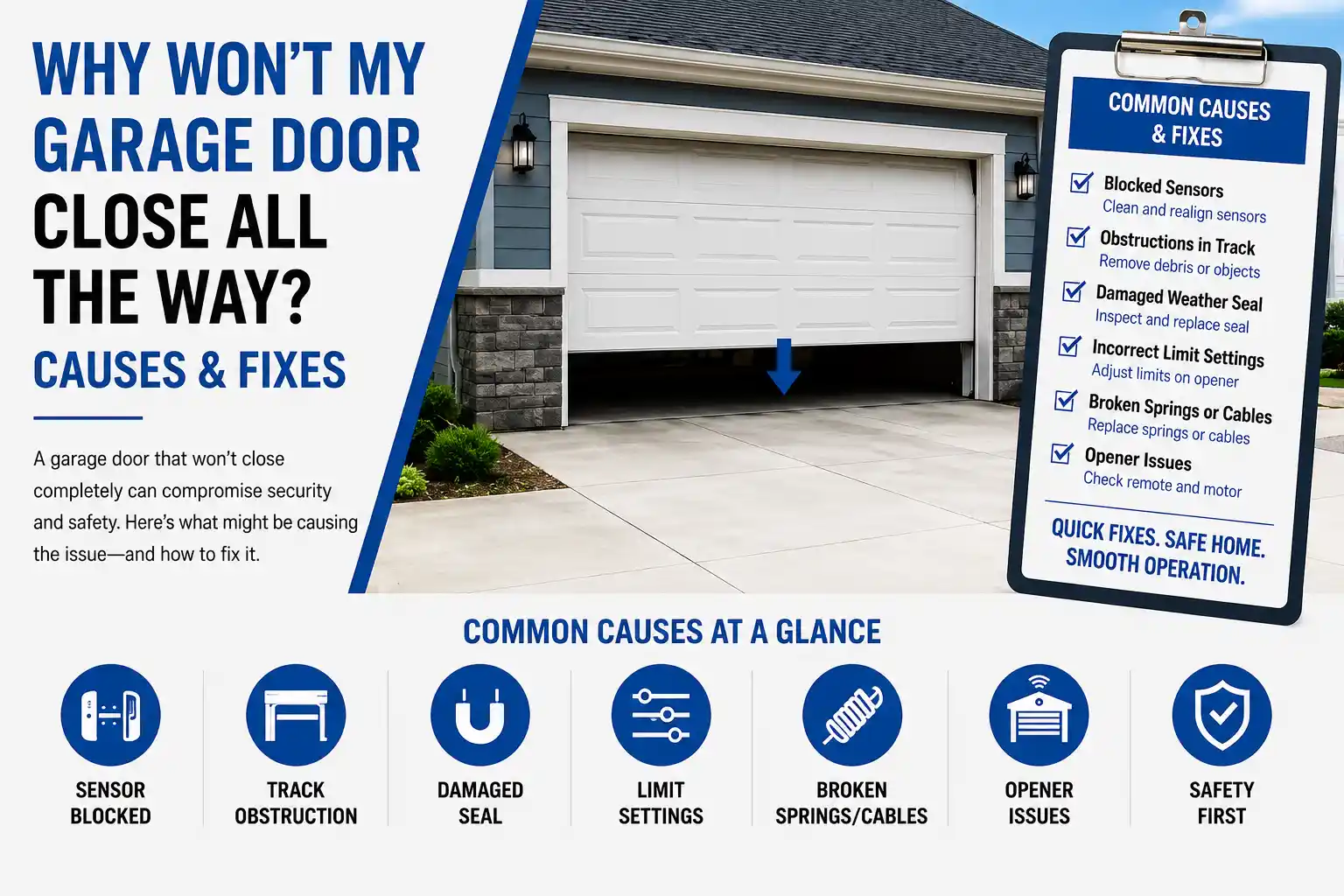

A garage door that won’t close all the way almost always has one of six problems: blocked safety sensors, misadjusted travel limits, an oversensitive close-force setting, a track obstruction, damaged springs or cables, or an opener fault. The good news is that the two most common causes take five minutes to check yourself. This guide walks Houston homeowners through each cause in order of likelihood, the safe DIY checks, and the point where the job belongs to a professional garage door repair service.
6 Reasons a Garage Door Won’t Close All the Way
Work through these causes in order; the first two solve the majority of won’t-close calls:
1. Blocked or Misaligned Safety Sensors
Safety sensors cause most won’t-close problems. Every opener made since 1993 uses a pair of photoelectric sensors near the floor that project an invisible beam across the opening; anything breaking that beam forces the door back up. A leaf, a trash bin wheel, cobwebs on the lens, or a bracket knocked out of alignment all trigger it. Houston adds a local twist: low afternoon sun can flood one sensor with glare and mimic a blocked beam. Check that both indicator lights glow steady, wipe the lenses, and gently realign the brackets until the lights stop blinking.
2. Travel Limits Set Wrong
The travel limit tells the opener how far “fully closed” is, and when it drifts, the door stops an inch short or slams and reverses. Openers lose this setting after power surges, and Houston’s storm season produces plenty of those. Most units adjust with two small screws or buttons on the motor head, and your opener manual shows the exact procedure for your model. Small quarter-turn adjustments are the rule; large ones create new problems.
3. Close-Force Setting Too Sensitive
The close-force setting decides how much resistance makes the door reverse, and a setting that is too sensitive treats normal track friction as an obstacle. This shows up as a door that closes fine on cool mornings but reverses on humid afternoons, when the door and tracks expand slightly. Force adjustments interact with safety functions, so make small changes and always retest the reversal safety with a scrap of wood under the door.
4. Track Obstructions or Bent Rails
Debris in the track, a bent rail section, or a loose bracket physically stops the door before it reaches the floor. Look for a spot where the rollers bind or the door visibly shudders. Pebbles and hardened grease clean out easily, but bent track needs professional straightening, since forcing the door through it damages rollers and panels. If the door jams at the same point every cycle, this walkthrough of stuck garage door causes helps you pinpoint the exact failure spot.
5. Broken Springs or Frayed Cables
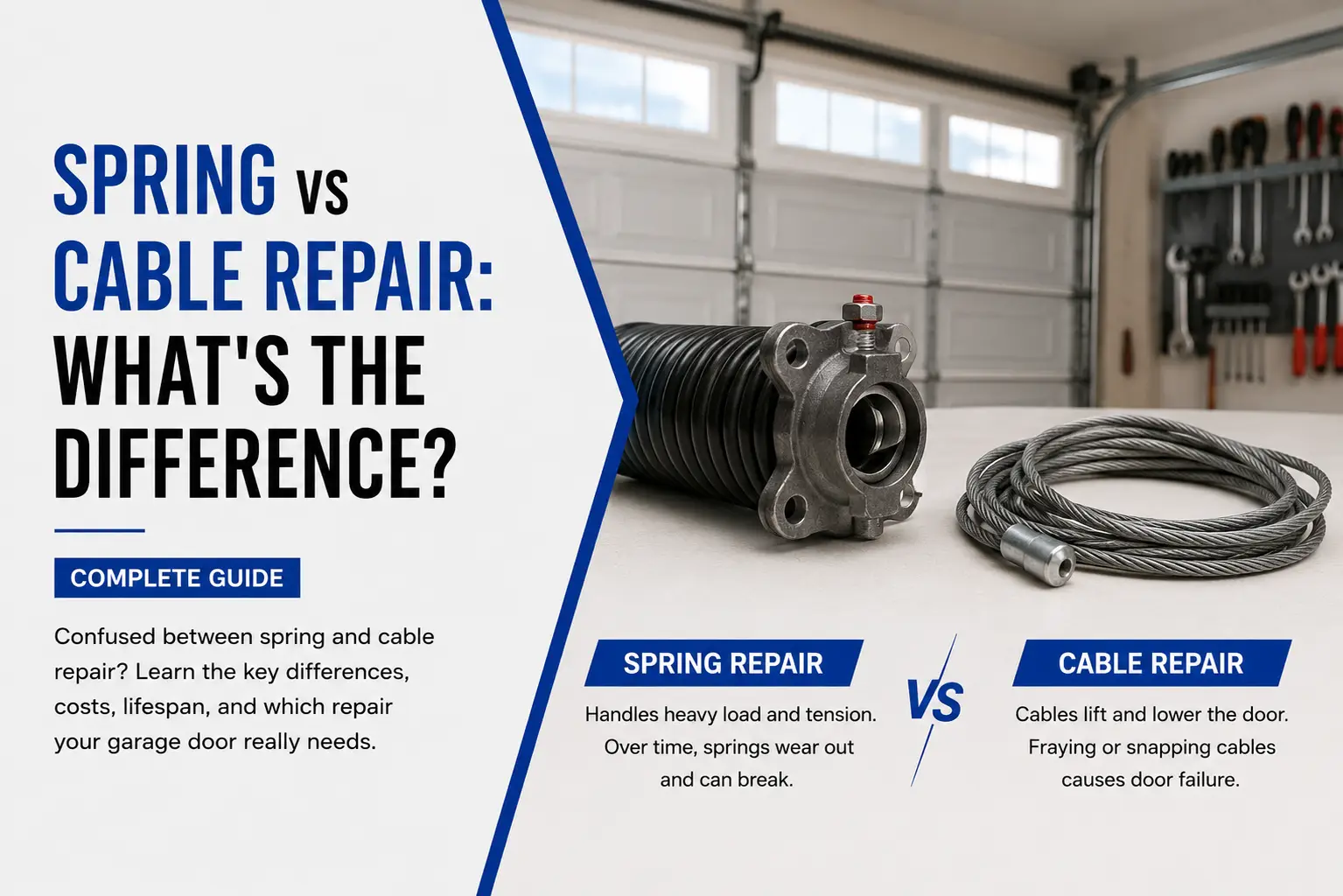
A broken torsion spring or frayed lift cable changes the door’s balance, and the opener’s safety systems refuse to drive an unbalanced door fully closed. Warning signs include a loud bang from the garage, a visible gap in the spring coil, or cables hanging loose. Stop using the door immediately. Springs hold enough tension to cause serious injury, and garage door spring repair is the one job that is never DIY territory.
6. Remote, Keypad, or Logic Board Faults
When the wall button closes the door but the remote does not, the problem is the remote battery or programming, not the door. When nothing closes it, and the sensors check out, the opener’s logic board may be failing, a common aftermath of Gulf Coast lightning storms. If your door also refuses to open, the diagnosis changes; this guide to a garage door not opening covers that direction of the problem.
Safe DIY Checks Before You Call Anyone
Run these four checks in order; they resolve most won’t-close calls without a service visit:
1. Clear the sensor path and wipe both lenses, then confirm both indicator lights are solid, not blinking.
2. Check the floor line for objects, ice-chest handles, hose nozzles, or debris the beam might be catching.
3. Hold the wall button down until the door fully closes; on many openers this overrides a sensor fault and confirms the sensors are the culprit.
4. Inspect the tracks and rollers visually, without loosening any hardware. Anything beyond cleaning and sensor alignment crosses into risk territory, and this honest look at DIY garage door repair explains where the safe line sits.
When to Stop and Call a Professional
Call a professional the moment the problem involves springs, cables, bent track, or a door that reverses violently. A door that will not close is also a security problem: an open garage all night in Houston invites theft, rain, and pests, which is why emergency garage door repairs exist as a same day garage door repair category. One warning worth repeating: never unplug or bypass the safety sensors to force the door closed. Homeowner threads in home improvement discussions on Quora are full of sensor-bypass stories that ended with crushed bumpers, damaged doors, and worse. The sensors are the safety system, not the obstacle.
What Does It Cost to Fix in Houston?
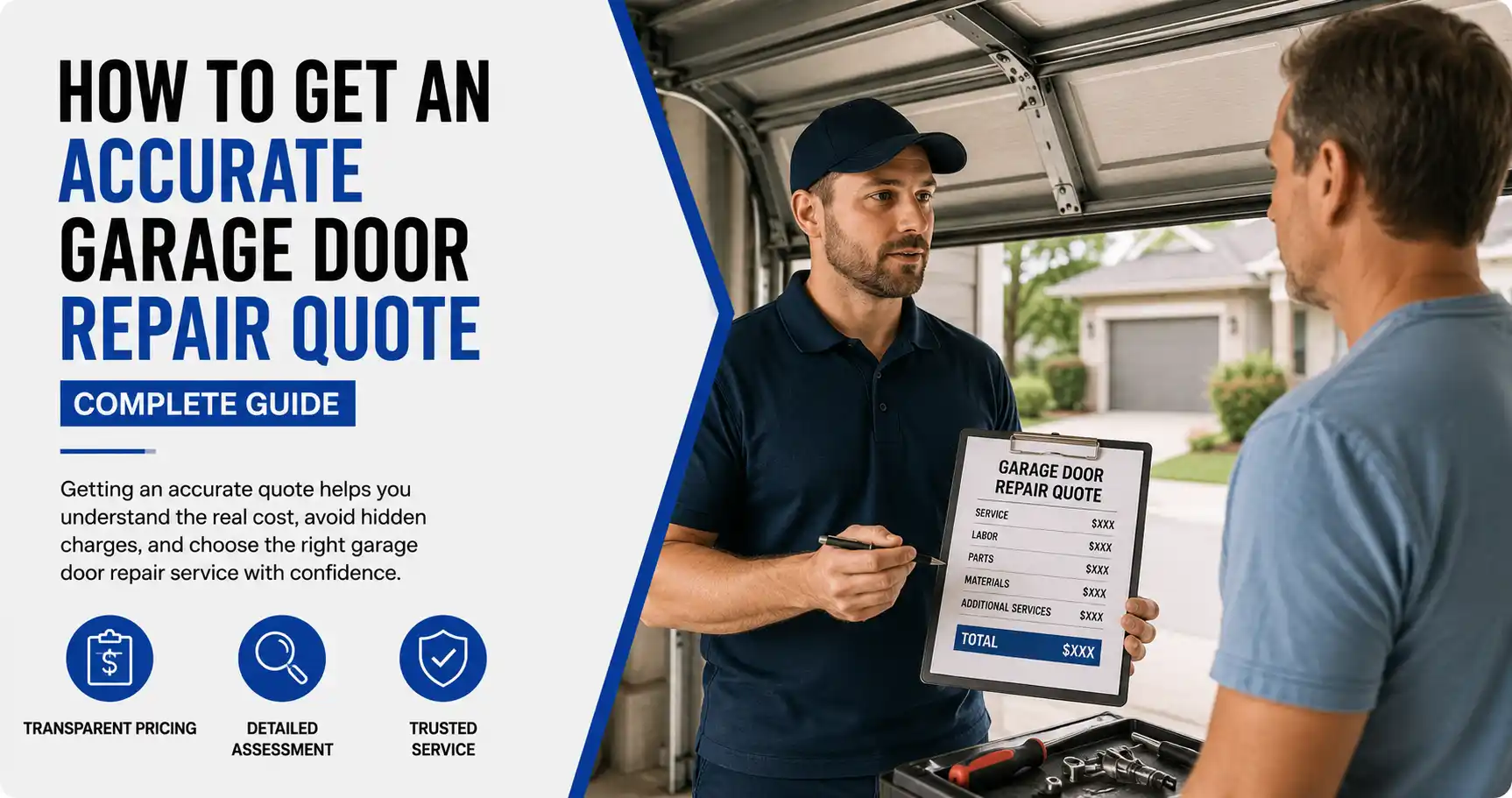
Sensor realignment and limit adjustments sit at the bottom of the garage door repair price range, often covered by a basic service call. Track repairs and roller replacements land mid-range, while garage door spring replacement and opener logic boards cost more because of parts and tension work. An affordable garage door repair company quotes the diagnosis fee upfront and applies it to the repair. For realistic numbers by fix type, review this garage door repair cost overview before approving any work order.
Preventing the Problem Next Time
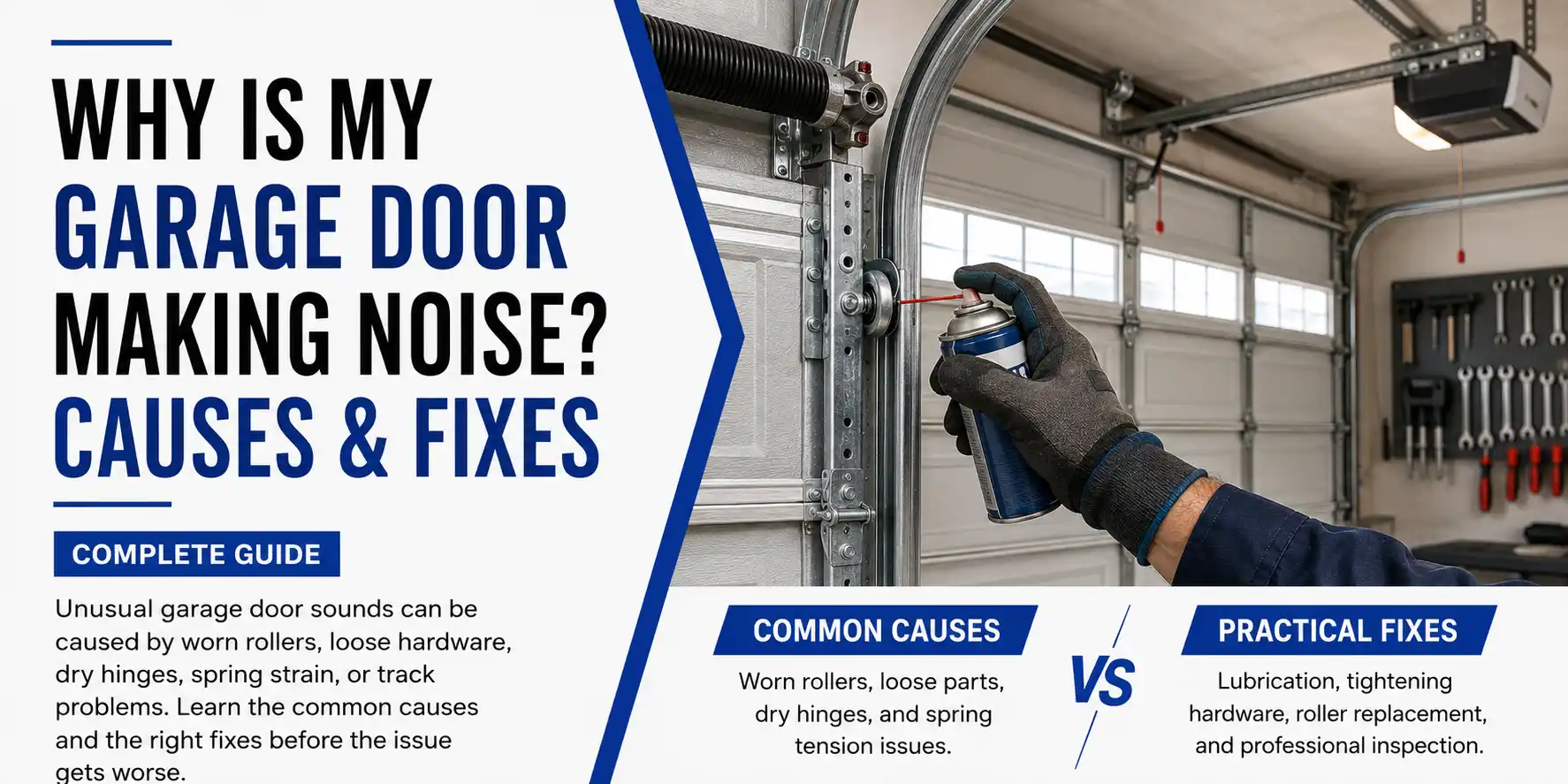
A twice-yearly routine prevents most won’t-close failures: wipe the sensor lenses, lubricate rollers and hinges with garage-door lubricant, tighten visible bracket bolts, and test the balance by lifting the disconnected door halfway. A professional garage door tune-up service covers the same list plus spring tension and force calibration, which is exactly the adjustment humid Houston summers push out of spec. Ten minutes of garage door maintenance each season beats a stuck-open door during a July downpour.
Frequently Asked Questions
Why does my garage door close halfway then go back up?
A garage door that closes halfway and reverses is usually detecting a false obstacle. Blocked or misaligned safety sensors cause most cases, followed by a close-force setting reading track friction as an obstruction. Clean and realign the sensors first; if the door still reverses at the same spot, inspect the track there.
What do the garage door sensor lights mean?
Steady lights on both garage door sensors mean the beam is aligned and working. A blinking or dark light means the beam is blocked or the brackets are out of alignment. Wipe both lenses, remove anything in the path, and bend the brackets gently until both lights hold steady.
Is it safe to bypass garage door sensors?
No, bypassing garage door sensors is not safe and removes the system that prevents the door from crushing people, pets, and vehicles. Holding the wall button to close the door once is an acceptable diagnostic step, but disconnecting the sensors permanently violates safety standards and creates real injury risk.
How much does it cost to fix a garage door that won’t close?
Fixing a garage door that won’t close costs little when the cause is sensors or limit settings, often just a standard service call. Track repairs cost more, and spring or opener replacements sit at the top of the range. Most Houston won’t-close repairs are finished in a single same-day visit.
Get Your Garage Door Closing Right with WeFix Garage Door Repair
Start with the sensors, check the floor line, and leave the springs alone; that order solves this problem safely almost every time. When the fix needs a professional, WeFix Garage Door Repair provides residential garage door services across Houston with same-day availability, upfront pricing, and repairs on every opener brand, from sensor faults to full garage door replacement. Call before the next storm rolls in, and close the door on this problem for good.